Recently, I have been scouring and sorting through hundreds of “landscape films” containing semi-documentary elements that I have either previously viewed or merely dabbled in; regarding the circulating resources of directors I have touched upon, I have likely missed very few works. About fifty percent of these are American films containing elements of the road landscape—such as those by Peter B. Hutton or James Benning—most of which do not contain literary characters or narrative elements. Another thirty percent consists of works by the likes of Russia’s Alexander Sokurov, including his attempts at landscape-icization (among them, excellent yet overlooked gems like Spiritual Voices [Духовные голоса, 1998]). In these Rus’ films, one cannot help but “notice” that the natural landscapes filmed on location often inherit the Russian literary traditionalism’s obsession with death and suffering. As for the remainder, aside from the lineage of Reis-Cordeiro and Pedro Costa, there appear to be very few attempts at the landscape-icization of the image in the Latin world, and territorial images of the Latin world—specifically the colonial vanguard—are even scarcer. Lav Diaz’s Magalhães [2025] fills a gap in film history that perhaps ought not to have existed. Roughly half of the film’s shots were filmed at “colonist outposts” in his homeland of the Philippines, interweaving characters (both Westerners and indigenous people), with their respective movements and languages, into natural landscapes captured in static long-focus shots. Through a method similar to, yet distinct from, his previous works, he seeks an anchoring point for the former within the latter. To anchor or lock minute dynamic subjects (people, the situation of discourse, and frail uninvited guests from off-screen) within those blank landscapes driven only slightly by the faint and mysterious flow of the wind is a challenge faced by creators beginning with the landscape-image history of Straub-Huillet. This endows the latter (the blank landscape) with a timeless, memorial significance; as Rilke’s poem says: “And if the earthly has forgotten you, / say to the still earth: I flow. / To the rapid water speak: I am.”
Perhaps, it is roughly on this level of anchoring mode and the stylistic relationship (between human and void) that it is difficult to imagine seeing a Diaz film like Magalhães. It essentially employs two completely different apparatus-like lenses: one is an unstable, non-static shot drifting with the wind—where the distinctions between interior/exterior and dynamic/solid are erased (what I metaphorically call God’s perspective); the other is a static reconstruction of an ensemble performance, where the colonialist’s discourse is sublated and preserved within a space treated as enclosed (what I metaphorically call the observation of human preaching and action). Such preaching by colonists in the makeshift shacks of the Philippines aims to “observe” the free will of divine grace and examine the mechanism of “mutual relations” within that grace. Coupled with landscape shots floating on rivers or oceans that appear without warning (seemingly responding to shots of human behavior), the interval between these two types of lenses possesses such a distinct, historically experimental quality that it often resembles an approach Albert Serra might take. I do not know if it is because this is an edited, ultra-short version, but I constantly felt that the segments depicting the primitive state of the colonized inhabitants (especially those centered on prayer) seemed too rushed here, preventing our senses from forming a complete reflex arc and generating interactivity within this temporal state, instead featuring too many amplitude jumps that shift and turn without existing for the sake of aesthetics.
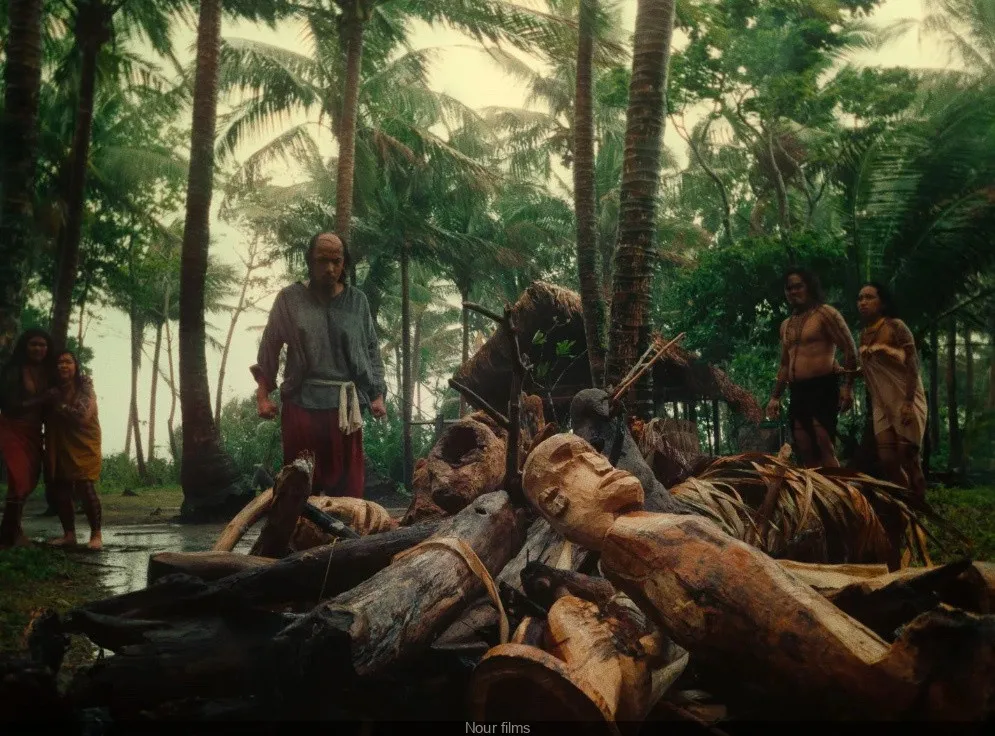
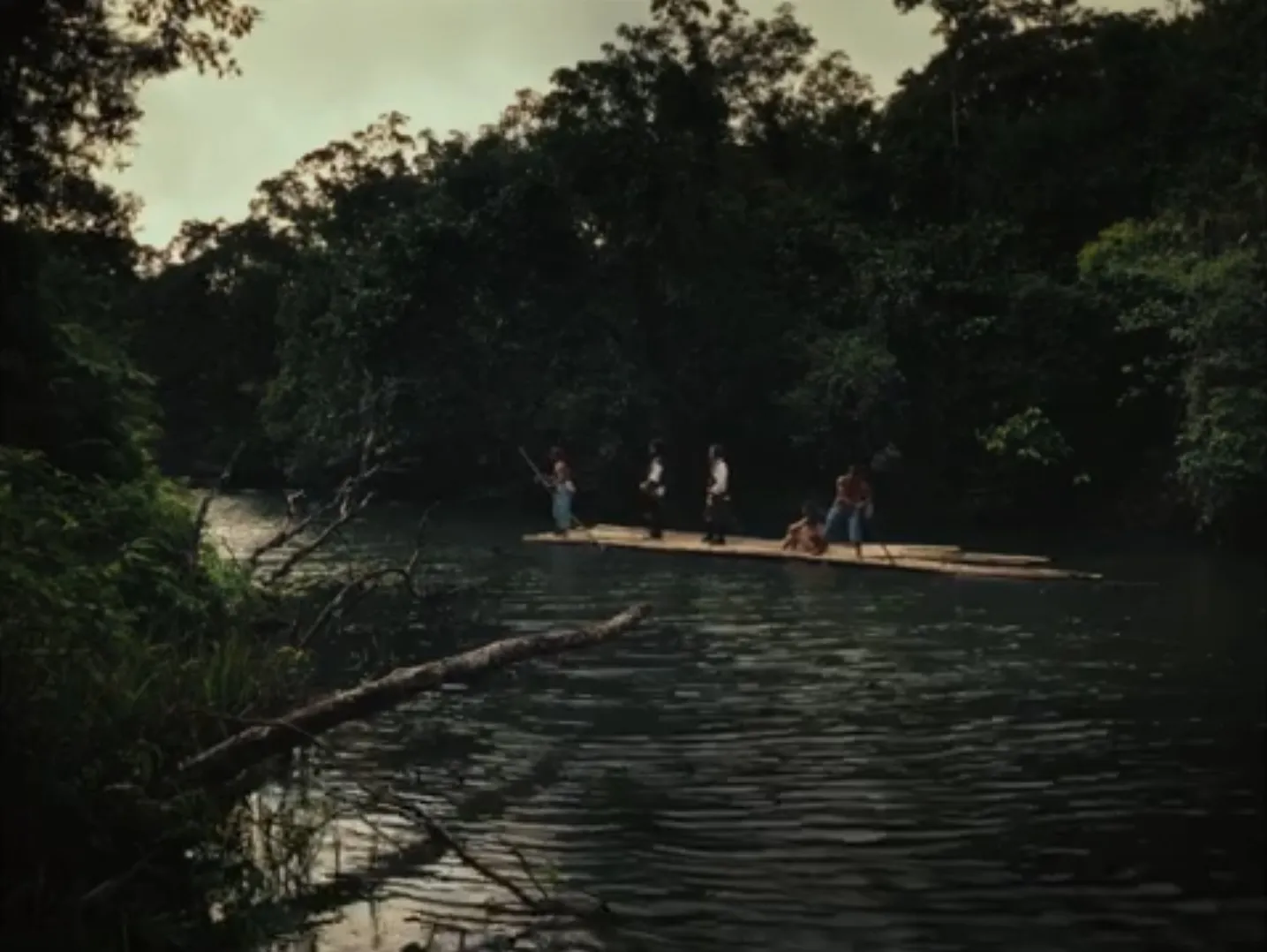
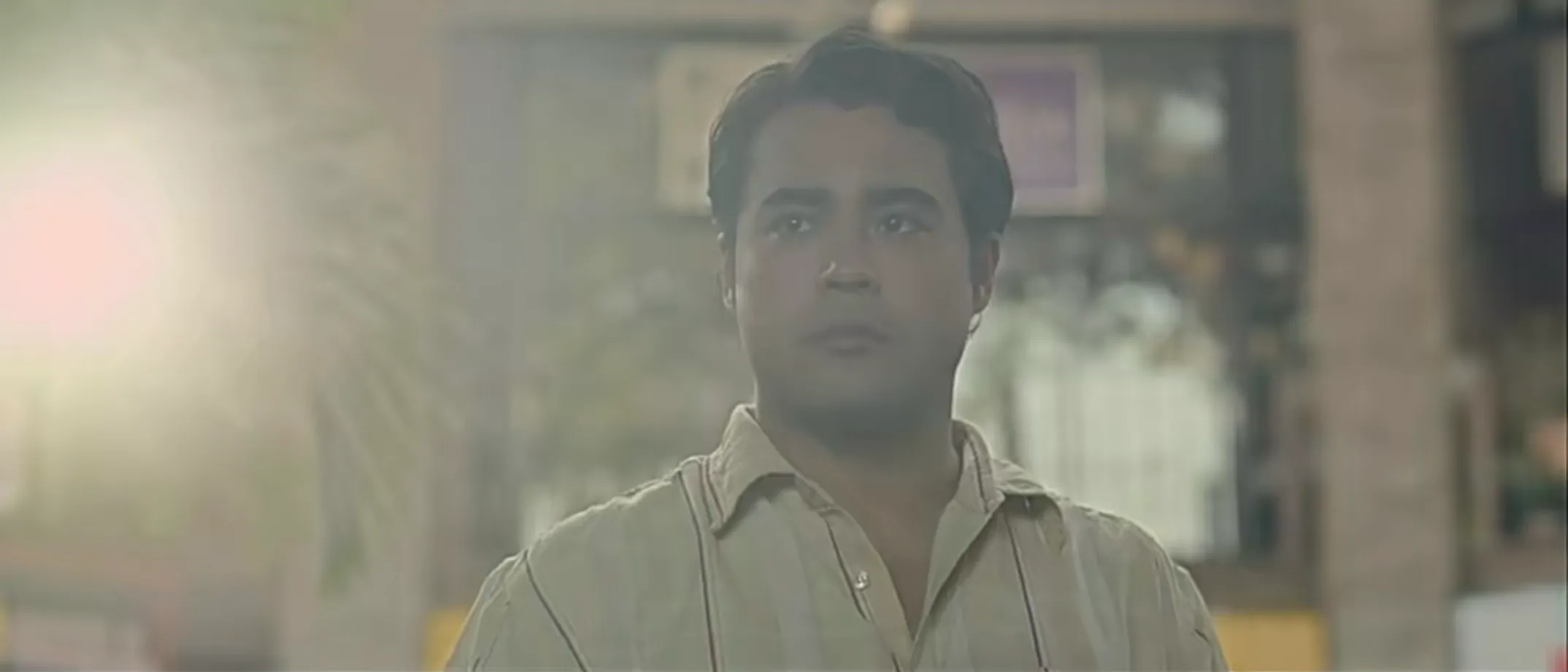
Let us reconsider the organizational method he adopts when dealing with the relationship between spectacle and the human condition. First, it must be mentioned that Diaz never tires of—and indeed has a penchant for—situations where he observes human powerlessness in the face of misfortune or injury, regardless of how a relatively able-bodied yet lost character arrives within the frame in such contexts. Take the second shot of Norte, the End of History [Norte, Hangganan ng Kasaysayan, 2013]: the camera first captures a woman lying on the ground, convulsing from severe injuries, then pans across the panicked crowd, and finally locks onto the melancholy expression of the law student, Fabian, and a beam of sunset light piercing through palm leaves (see image 3 above). Filming such static figures that intrude from off-screen or are encompassed by camera movement undoubtedly signifies a condensation toward a singular form, and at this node of condensation, grants the possibility of “opening” the next entirely new shot scale. Admittedly, Diaz certainly cannot, like East Asian directors such as Kenji Mizoguchi or Akira Kurosawa, use an “uninvited guest” character intruding into the frame during the blocking of a historical drama’s ensemble scene to disperse the viewpoint and evoke a new situation of confrontation or dialectics. However, through this “inaction” or “ungrounding” of cold observation, he re-illuminates that hidden image of synchronicity and updates the content within the frame/image—although in Magalhães, due to the larger span of transitions occurring in visual amplitude, this synchronicity (the powerful mnemonic connectivity evoked within the massive ontology of film) is rarely explicitly revealed.
However, regarding these issues mentioned above, the tactile quality of Magalhães on the spectacle-spatial level naturally differs significantly from his past works. From the (former) enclosed dwellings of Philippine slums to the angular Latin architecture, ship decks, and blank landscapes, a more unbreakable, whetstone-like texture is produced. Such a tactile sensation has only been experienced similarly in the houses of Pedro Costa’s Colossal Youth [Juventude em Marcha, 2006] and in the open river channel shots near the end of that film; it is less a resonance of organizational method and more an intertwining inevitably produced by landscapes of the same regional character. This material texture likely undergoes a transmutation following the change in scenic style as the film returns to Portugal—the land of the colonial pioneers—after the first part in the Philippines concludes with title cards marking the year and location. This is often the kind of entirely new texture produced when creators like Diaz detach from the landscape style of their homeland, much like the specific texture found in Memoria [2021], filmed by Apichatpong Weerasethakul in Colombia after detaching from the Southeast Asian/Theravada Buddhist landscape.
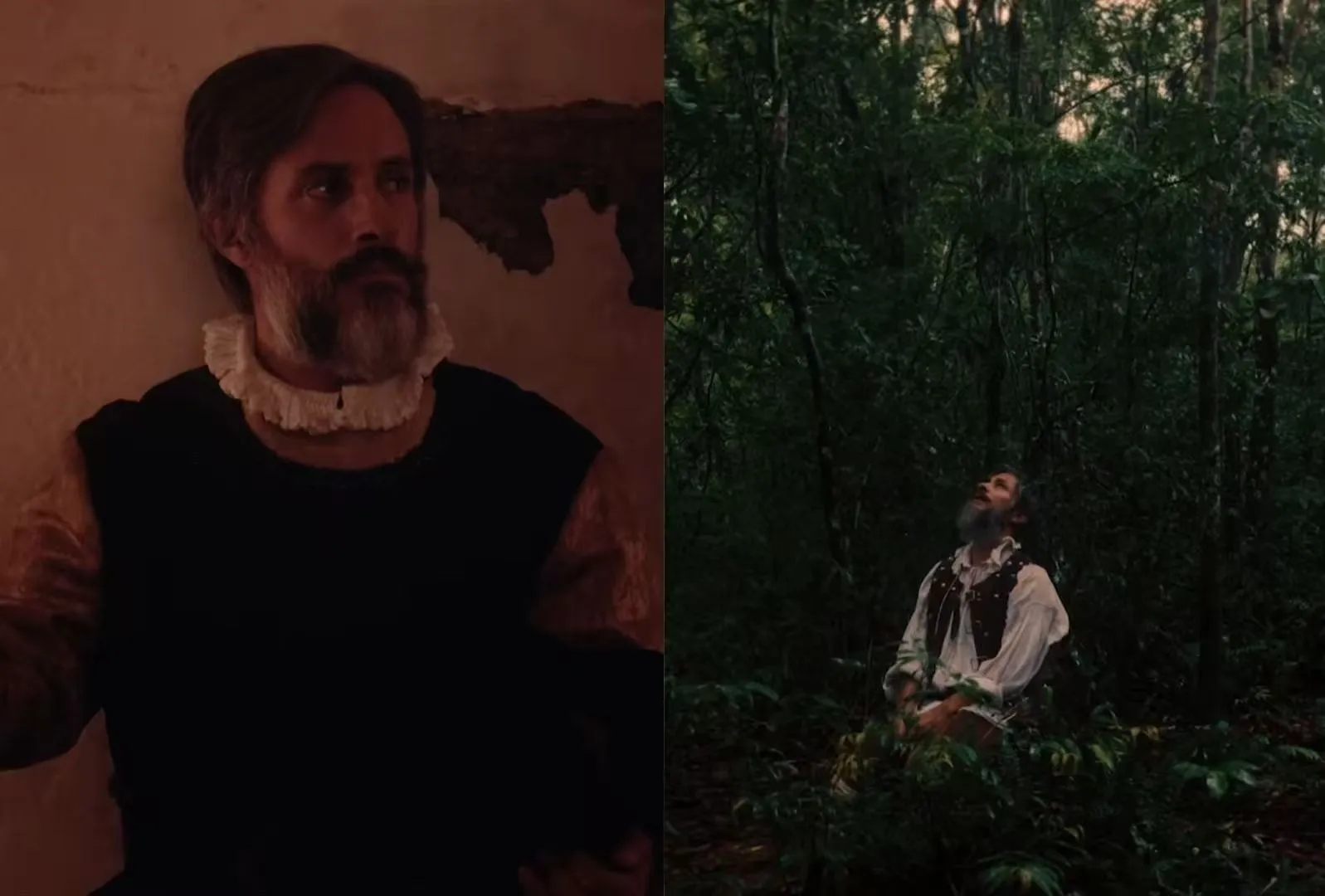
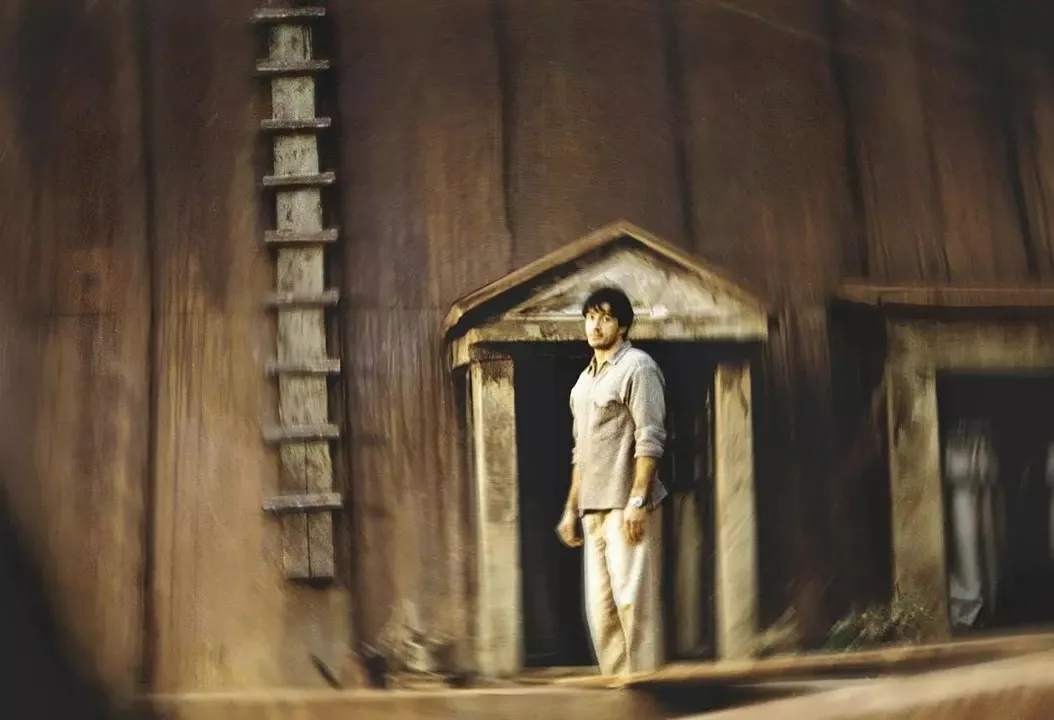
It is precisely in the segment taking place in Lisbon that Diaz creates the most singular tactile sensation in his cinema. Accompanied by obscure halos of light from the firmament, the castle architecture filmed under low-angle shots with minute degrees of tilt appears slightly slanted and deformed. As for the characters—whether the woman waiting and weeping by the sea, the figures standing before the architecture, or the participants in the dim ball—a state of weightlessness is created, akin to that famous flying shot in Andrei Rublev [Андрей Рублёв, 1966] or the distorted figures and architecture in Sokurov’s films. (Whether this effect is achieved through on-location shooting or post-processing, it opens up a “deformed” viewing experience. A special case worth mentioning is David Lynch’s two feature films from the 2000s, Mulholland Drive [2001] and Inland Empire [2006]; although specially processed “deformed” faces and bodies appear repeatedly, this is by no means to open the characters toward a certain landscape, but rather a reverse voyeurism—to peek into another corner of liminal space within the Menger sponge-like structure of his cinema). The women of Lisbon, whether braving the waves on the coastline, pacing in corridors, or dancing with their shadows at a candlelight ball, all possess a self-evident correspondence with the indigenous women in the Philippine colony who wade into the waves or hold prayer rituals; this is a metonymic setup. These scenes endow dynamic subjects with their unique memorial significance, while simultaneously becoming the inevitable result of motion themselves, until the ship completely recedes and vanishes onto the horizon. It is also in these experimental scenes in Lisbon that Diaz’s demands on sound design begin to reveal themselves.
Especially after the camera throws itself into open environments, the sound design of Diaz’s films has always obeyed a fairly simple two-layer compression of internal/external (except in indoor scenes like the violent murder in Norte, the End of History [Norte, Hangganan ng Kasaysayan, 2013], where more sub-categories of sound were set). Sounds generated by human friction are mostly located at the internal source, while natural objects—such as the sound of waves, the rustling of forests, and the friction of sails and hemp ropes in the wind—are almost entirely placed externally. As external environmental factors become more complex, the number of sound sources set for sound-producing objects remains condensed into a single location. The result of this treatment is that, within the singular background environment, minute dynamic elements (dynamic/behavior as another internal sound source) maintain their original parallel movement relationship with it—there is no indexical relationship between the camera movement axis and topography. Presumably, Diaz is not that interested in the natural topography of dynamic shots; what interests him is condensing the character subjects of multi-thread narratives into the only valid signifier of parallel temporality (or synchronicity). Images bearing such signifiers have achieved (or attempted to achieve) a powerful indictment of reality in Norte, the End of History [Norte, Hangganan ng Kasaysayan, 2013] and The Halt [Ang Hupa, 2019].
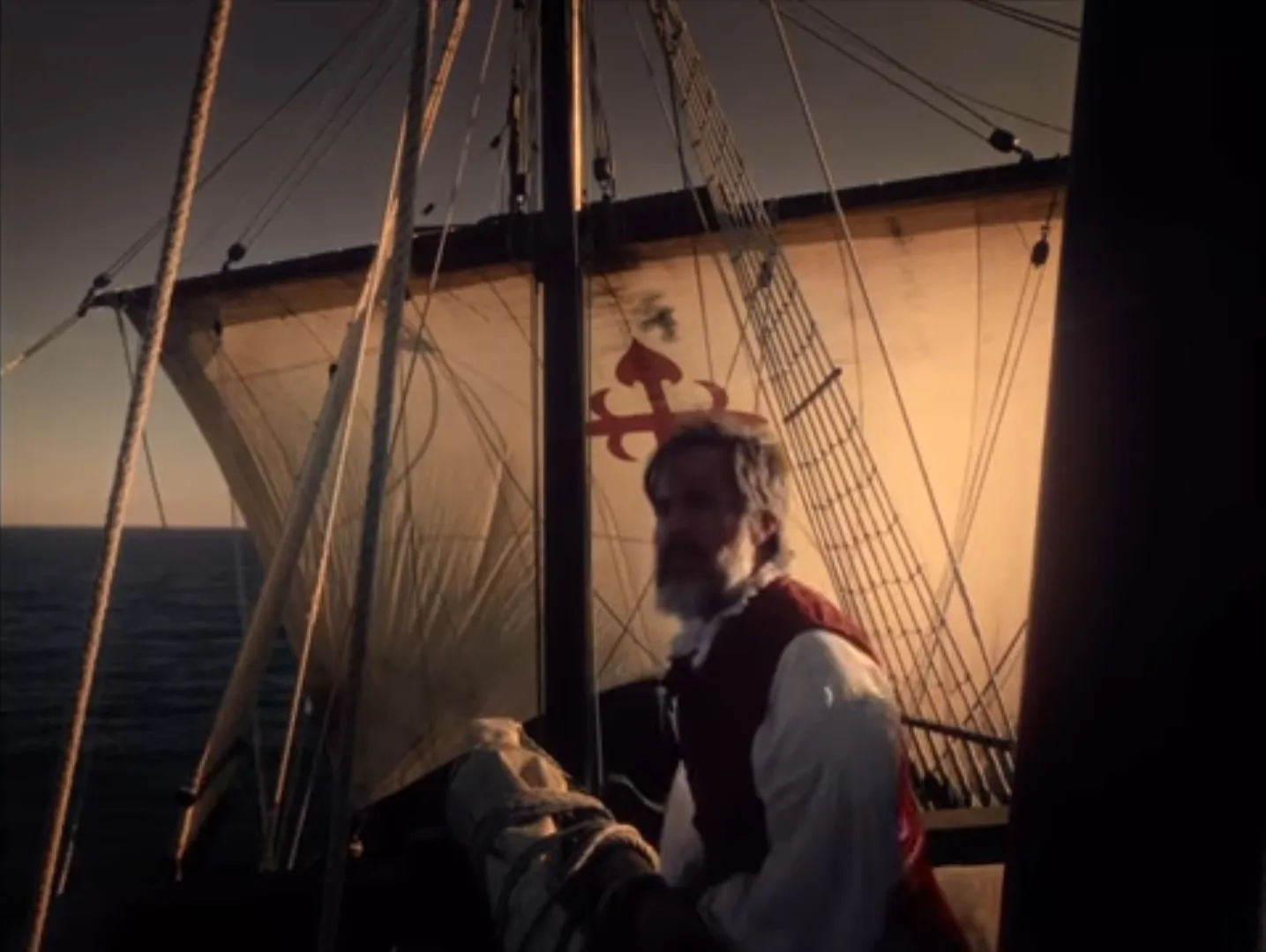
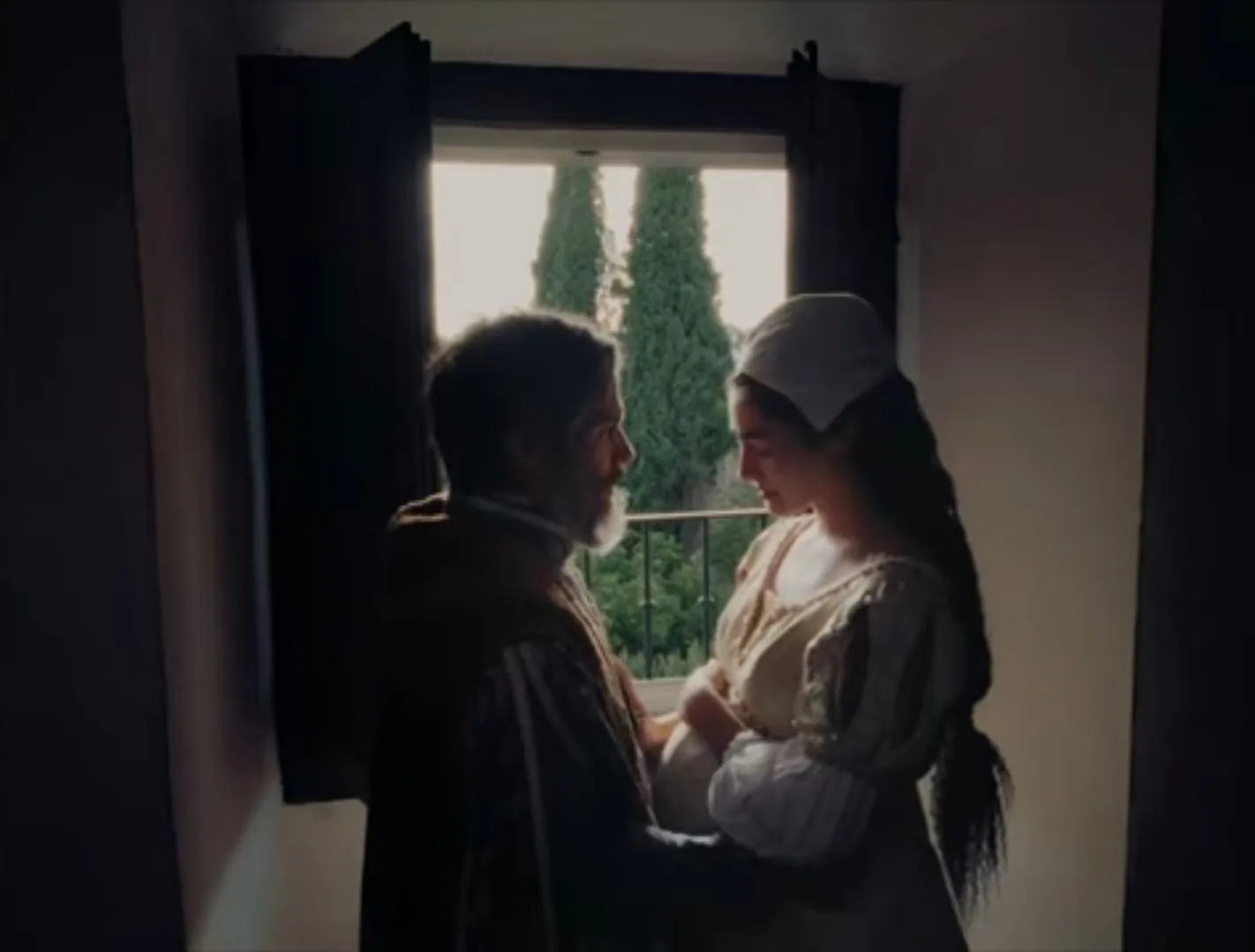
Although directors have a high degree of freedom in designing sound sources and sound recording—setting them as internal/external, different layers, channels, and other distinguishing factors—and mixing up a category during design would lead to disastrously erroneous effects, the design of visible dynamic elements is strictly confined within the frame/space. The director does not possess the power to add extra dimensions simply for the sake of dynamic objects, even if the apparatus-ization of the image has already expanded the degree of freedom for interaction between them (I once witnessed the furthest disparity between visual and auditory design on the vector of simplification-complexification in Bresson’s late films). At least in the shots on the ship’s deck and inside the cabin, Diaz’s pursuit of minute, infrathin1 dynamic differences has reached an extreme. When the camera itself is static, using the deck as a reference, the hull rocks up and down (as in camera position 1 above): swinging upward to meet the boundless skyline, and downward to reveal the sparkling sea surface. The natural swaying belonging to the background replaces the relative static effect, dissolving the solidity of the fixed camera position and outlining a surrounding place centered on Magellan in the foreground; they act as placeholders in this subtle panorama. Before filming Cebu in the Philippines, there is another shot placed on the sea surface: the tip of the bow abuts the morning light, the bow and sails swaying peacefully with small amplitude, and Magellan stands at the pinnacle of the ship, facing the Philippines that lies within the next shot. In the gloom of the cabin, the frame becomes a black screen, and external light becomes scattered and frugal chalky paint; a woman recalls her deceased child, and after a monologue, she lies back into the gloom and is embraced (image 2 above shows the first appearance of their scene of love). These places sketched by Diaz are here, without exception, to confirm and survey a form of time that has been conceived there: no matter how minute the movement, there is always a dynamic within it.
The term infrathin (French: inframince) cannot be precisely defined. Originally coined by Marcel Duchamp, it is used in most cases to describe the minimal perceptual difference between two things / the mutual difference between organic forms. This may be manifested in scale, in perceptual experience, or in the gap between inspiration and the created object. Some simple examples include the minute difference between the local linear approximation of a tangent plane and the actual curved surface; puns in linguistics; or those short phrases by Raymond Roussel that look similar but have completely different meanings.
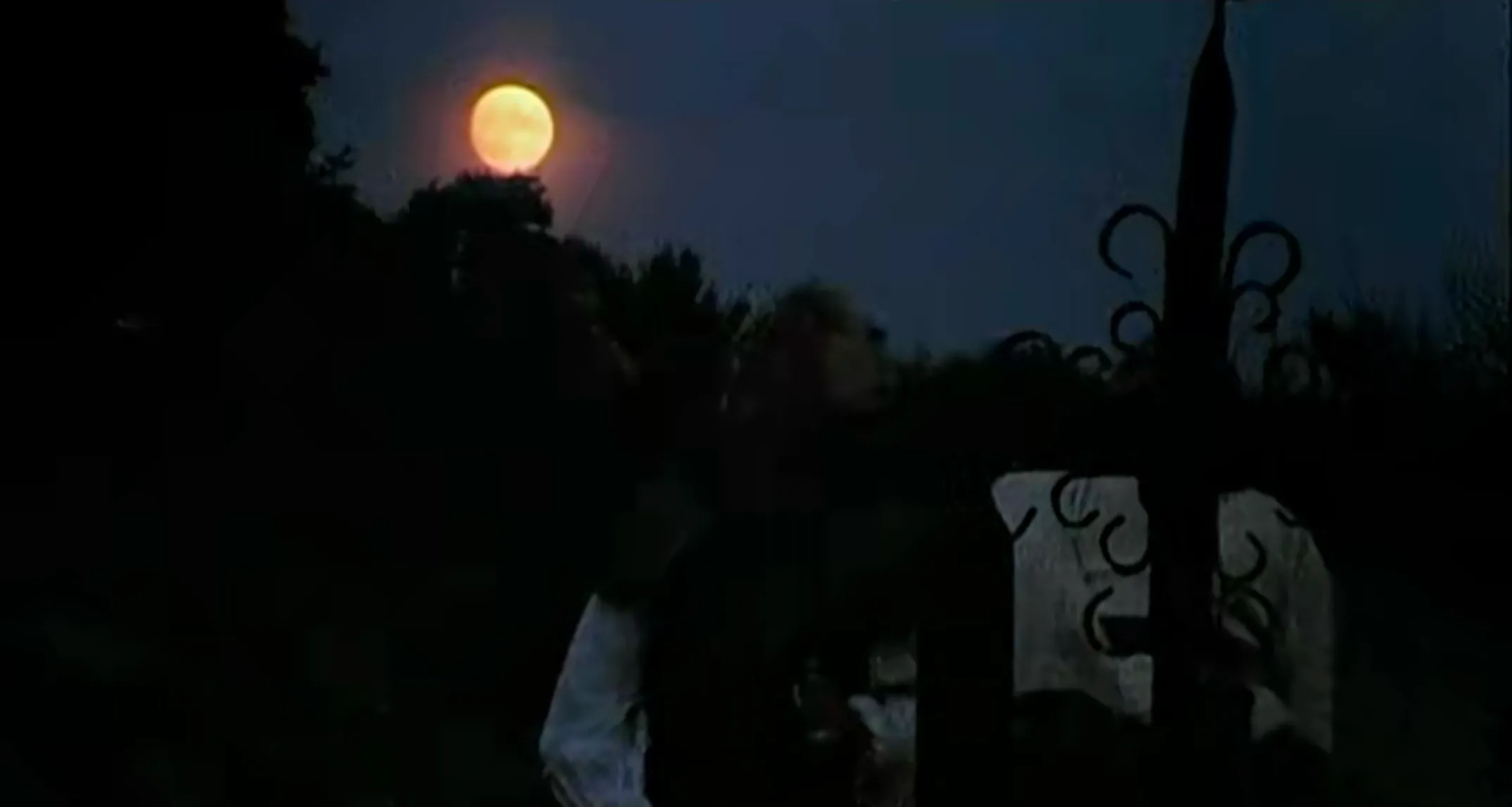
Also in the sailing shots filmed in this section (the camera suddenly cuts to a position viewing the ship from a distance on the sea), the lens is placed on the sea in this night scene, where only scattered light sources exist: moonlight, faint lights on the ship, and the occasional flash of explosives... In this scene employing entirely natural light sources, all tangible things are visible only as flickering silhouettes. It is hard not to be reminded of the scene in Albert Serra’s Honour of the Knights [Honor de cavalleria, 2006] where Quixote and Sancho rest in the fields under the moon (image above). The more dramatic overlapping language of the original work is replaced by Serra with simple greetings and straightforward expressions of emotion; in Serra’s creative sequence, it belongs to the works less obsessed with microscopic symbols of death. They will continue to march amidst the flow of light and wind, and Magellan’s voyage similarly belongs to this mode of action. This is precisely a transmission of the Latin spirit of freedom since Cervantes, with the book Don Quixote as a classic and spiritual wellspring; one side of it is the nature of the voyage, the other is the spiritual character of Catholicism. Diaz created this haunting sailing section while steeped in this spirit, whereas the shots in the Philippines return to the expression of nostalgia not uncommon in his works. There are always waves of echoes constantly reflecting back and forth between these two places.
However, after the screening of Diaz’s Genus Pan [Lahi, Hayop, 2020] in London, he stated in an interview with the BFI that the camera captures invisible observers, while composition or so-called framing is merely to reinforce the so-called narrative and flow, and to present a (cinematic) world2. Therefore, perhaps we should not focus too heavily on the surface similarities of his composition and framing with images from other regions; rather, the detection of subtle elements during the viewing process is of paramount importance. Furthermore, on the auditory level, Diaz has consistently made music, hymns, and songs a fundamental part of the film’s discourse in his films by treating them as natural components of the real narrative rather than technical decorations or embellishments. In films including Magalhães [2025] that respond to the condition of the Philippines, discourses on community, elegy, and ritual are internally reinforced because they originate from humanity itself.