Oh, to simply describe what I intend to describe! To swiftly grasp what I am on the verge of understanding!
1.
A few examples come to mind.
Žižek once offered a brilliant exposition on Rossellini’s masterpiece Germany Year Zero [Germania anno zero, 1948], incorporating this argument as a core insight and analytical case study in his book Enjoy Your Symptom!: Jacques Lacan in Hollywood and Out. While I am neither a devout nor fervent Lacanian, I still hold Žižek’s analysis of the film in high regard. He described the character played by Edmund Moeschke—a child who kills his bedridden, ailing father after being “indirectly instigated” by a teacher harboring fascist ideals—with these words: “He lost his childhood.” The crux of this analysis is that Germany Year Zero is consistently flooded with two opposing ideologies: one is fascism, the other is the fundamental kindness and pity within the human heart. This is easy to understand. We find that precisely due to the interaction of these two ideologies, Edmund Moeschke’s body ends up in a state of “suspension” by the film’s end (that is, after he has killed his father). In Rossellini’s final sequence, the boy—an indistinct image we cannot accurately capture (with our gaze), suspended by the collision of two ideologies—moves toward a self-destructive conclusion: he jumps to his death amidst the ruins, which are also the ruins of cinema. This is the inverse of Stromboli [1950], where the shattered landscape of post-war Italy becomes a vivid three-dimensional set.
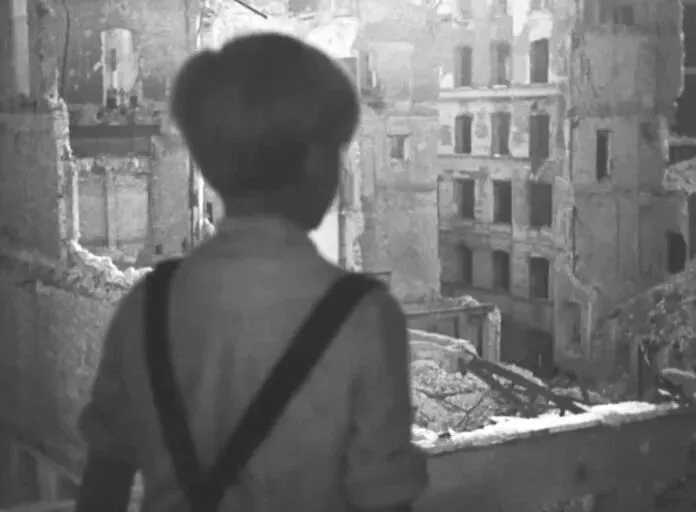
Žižek’s analysis is undoubtedly illuminating for us; his description hints at the possibility of searching for the images of ideology and the ideology of images within cinema. We see how Moeschke’s body is viewed as an image while simultaneously undergoing deformation under the interference of those external ideologies. Enough, let us cast Žižek aside for a moment. Because the same mode of thinking and paradigm is sufficient to face the constellation of images in One Battle After Another [2025].
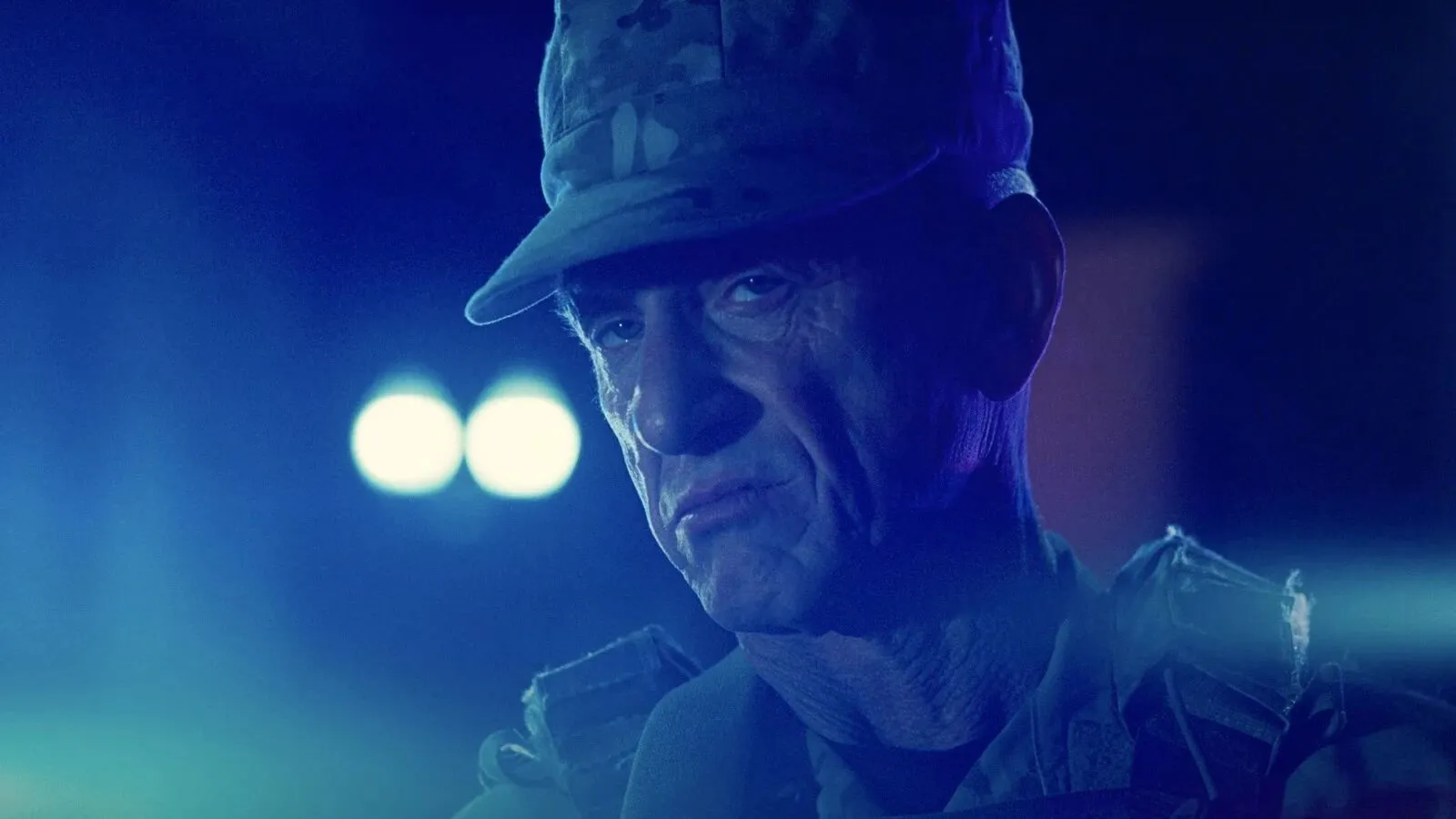
It is all too simple. Two fathers, two ideologies, two images that encounter one another only once from beginning to end (one is a voyeuristic shot of Lockjaw catching a glimpse of Bob Ferguson while spying on Parfidia; the other is when Bob sees Lockjaw unconscious—both are unidirectional viewpoints)1. Willa, as the crystallization of the new world (she is the amalgam of Bob Ferguson’s extreme left-wing ideology and the latent neo-liberal ideology popular within American high schools), is just like Moeschke, buffeted by two conflicting ideologies. She experiences a stage of “suspension”—after Willa learns her mother was a traitor to the revolution and that Lockjaw is her biological father, that series of physical clashes and acts of disobedience captured by PTA stands in stark contrast to her calm, hesitant stance when she first escaped—but ultimately, she chooses the image of DiCaprio and the ideology behind it.
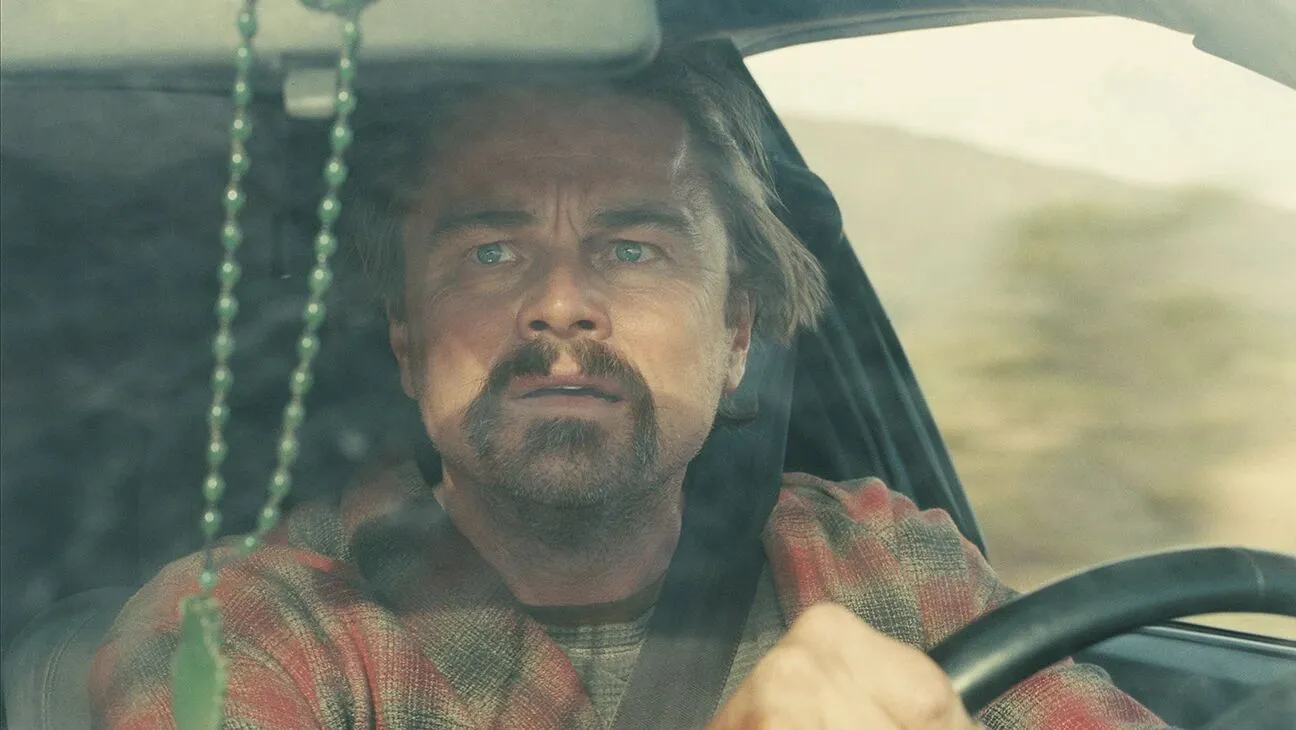
Lacanians could easily draw upon their knowledge to reach such a conclusion, and I trust many critics have already subjected One Battle After Another [2025] to similar analyses. It is so easy to produce such an analysis, but what I want to talk about is far removed from these surface-level matters. I want to talk about images. Or, what interests me more: PTA’s politics of mise-en-scène.
A reader pointed out, “The most important meeting between Bob and Lockjaw happens in the supermarket.” When writing these notes, I subjectively and completely overlooked this scene, yet that was indeed the only direct dialogue between the two images in a true sense. Sometimes, I think PTA is very intent on letting “Love” appear as an ideology within the film as well. — Author’s Note
2.
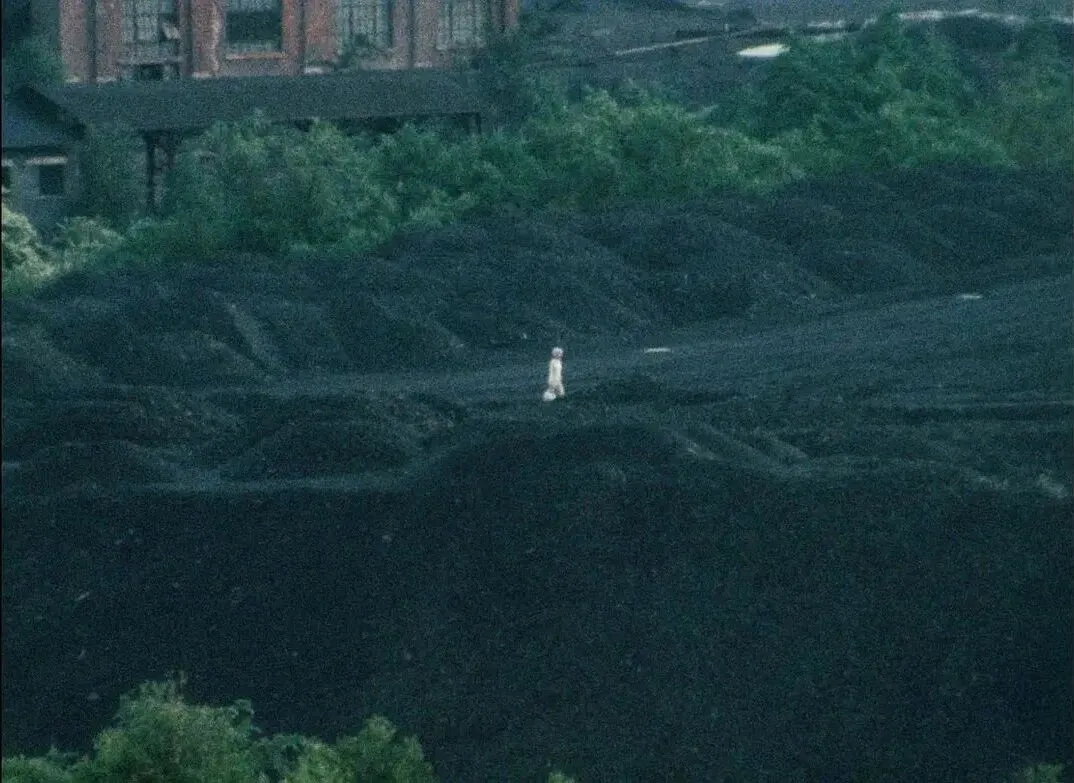
A scarecrow. In the vast rice paddies, there is nothing else; to deter thieving birds, scattered materials are assembled into a simulacrum of flesh and blood to stand there. Becoming an image. Becoming a facade standing at the center of a landscape. Although it might be nothing at all, the ambiguous situation and shape allow them to briefly become other, sufficiently concrete things. A bit like an unintentional murmur being cleverly deciphered by the hard of hearing as a concrete statement. That is largely the gist of it. Do not forget the long shot of Barbara Loden walking through the black coal piles in white clothes; you could mistake her for a fuzzy white moth—after all, in a long shot, both could simply be a white spot, no?
3.
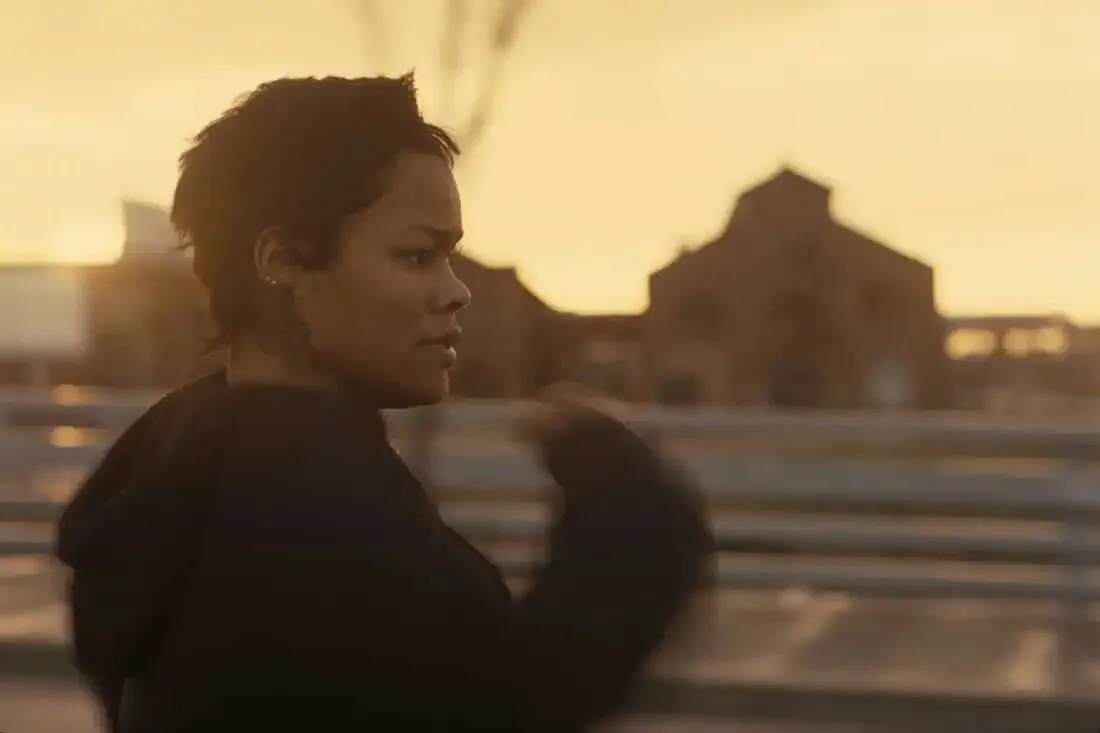
In One Battle After Another [2025], PTA assigns a specific mise-en-scène to every solitary image. Do not ignore these beautiful (I remain skeptical for now) moments. For Parfidia, played by Teyana Taylor—an image of a proud female warrior devoted to the revolution—PTA chooses to shoot her with numerous tracking shots of her running, particularly several rapid 90-degree profile shots. Indeed, the most intense reactions an image can generate likely converge upon her. But what impressed me more, what has arguably lingered in my mind, are the shots of Lockjaw, played by Sean Penn, walking through various corridors: a white male, always in military fatigues, perhaps with a leg injury, walking toward us. The camera films frontally from a low angle, making the limp in his gait increasingly conspicuous. Why does such a posture strike so deep a chord? Of course, aside from Sean Penn’s exquisite, wretched performance, we must also note PTA’s mise-en-scène technique—a fictionalizing power reliant on the shifting of shot scales.
Critics have already pointed out that the achievement of PTA’s films lies in their ability to always grasp the dissolution of emotional “certainty.” This might be a kind of PTA-ism, but in essence, it is closer to a certain spirit of entertainment, one that avoids becoming mere decoration. Yet we cannot ignore that this ability relies on PTA’s certainty regarding the fictionalizing power of shot scales and his gift for using them ingeniously. For instance, when Lockjaw trades with the white man of Native American descent deep in the canyon, I am forced to realize that this scene—or rather, the choice of the extreme long shot and focal length that permeates this setting—is so vital to the entire film. This is a stratagem of mise-en-scène, causing a subliminal shift in the film’s tone, transporting us to a territory “too remote” between image and image. Here, distinguishing between ideologies is no longer meaningful, nor are they things that must be conflated; rather, it is a dizzying reality that only American cinema can induce in us: the landscape envelops the image.
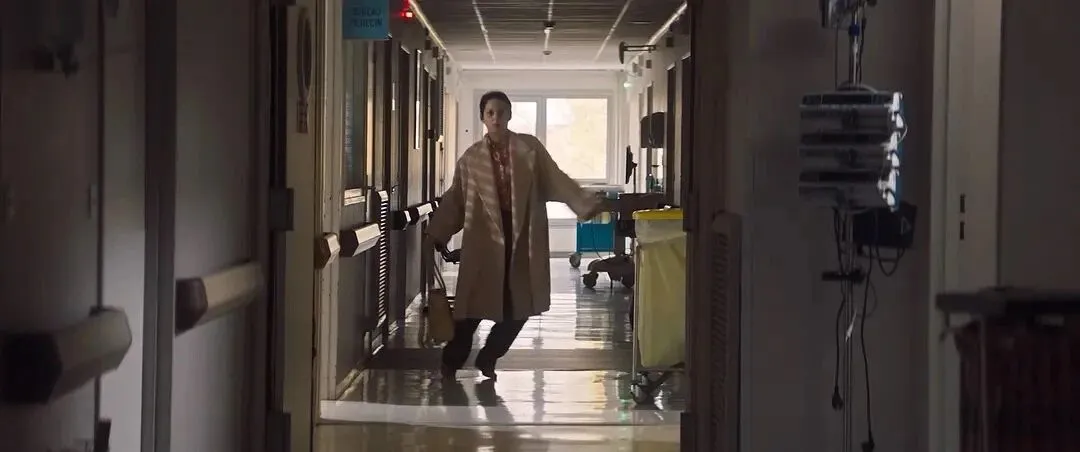
I realize that here, I must mention Desplechin’s Brother and Sister [Frère et soeur, 2022]. In a famous scene, the brother and sister, who fell out years ago and resent each other, reunite in a hospital corridor. As a sudden, massive emotional collapse strikes, the sister chooses to suddenly fall in front of her brother, pretending to have fainted dead away. In this moment, inevitably, we see how the image ages rapidly, even in the time that follows in the film. Its power is particularly feeble. Conversely, Minnie and Moskowitz [1971] is a film that has fallen into senility from the very start, every scene almost covered in lazy motes of floating dust, until Cassavetes films the scene where Minnie and Moskowitz argue in the bedroom. A sudden close-up: we see Gena Rowlands incredibly shed a single tear. It is as if Cassavetes used mise-en-scène to throw us at the screen to solve those pending problems; through this tear, we infinitely approach the image of Moskowitz’s face. That is the secret of one image truly arriving at another for the first time. And from that moment on, Minnie and Moskowitz [1971] became a young film. — A bit of a digression.
4.
Recognizing the image. This is the only theme of One Battle After Another [2025]. To recognize, and to re-understand it. And so, unconsciously, we seem to forget when we came to side with Willa. We understand the whole film (the postures, movements, and velocities within it) just as she re-interprets the history of her father’s generation. This world is adrift with too many dangerous images, and to accurately identify them, we have only conviction: aside from the concrete device held in our hand, a certain “trust device” must also exist at the bottom of our hearts. What is that? — It is the sole image, a clear face. In the end, Willa cannot confirm if she can trust the person before her. She raises her gun; shooting him is far safer and simpler than re-understanding him. But she doesn’t. We finally discover, as if we had predicted it all along, that the two images embrace. They choose each other, and re-recognize, re-understand that unknown base color of the other that was obscured by the dangers of the world.
How difficult it is for the critics of our age to truly rediscover, as Serge Daney did, the “off-screen” secrets like those in Trás-os-Montes [1976]! Let us re-recognize the image; our task lies here. Even if it is indeed a problem like a “scarecrow,” we are forced to accept the ambiguous hues smeared over the surface of all things. But, the consistent innocence and pedagogy of American cinema is this: before you correctly recognize the image, you must first notice the landscape.