1
The Law separates us.
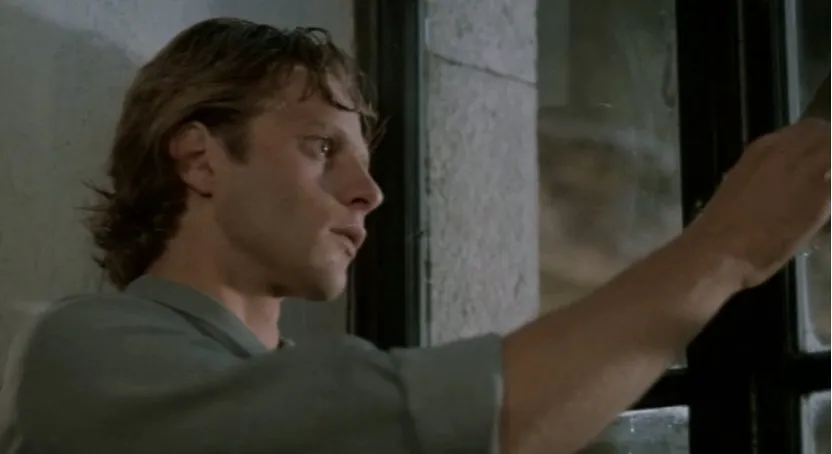
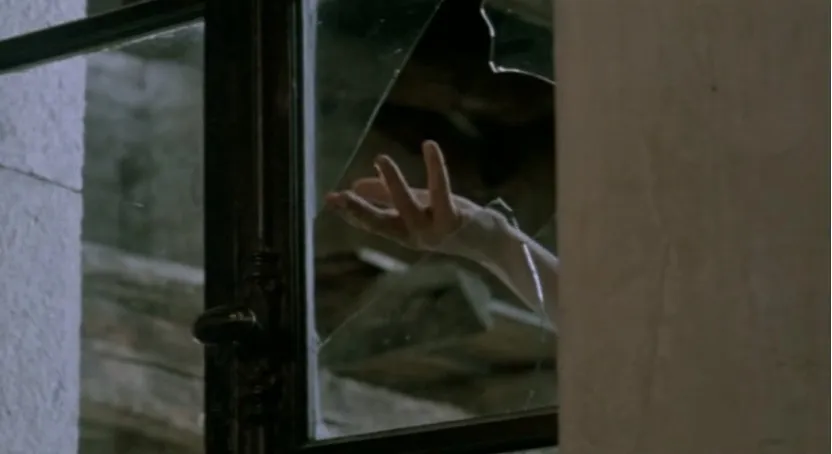
At the end of Hurlevent (1985), Heathcliff sees Catherine’s hand reach in from outside the window and hears her call his name. He rises from his bed and walks toward the casement. The shot cuts before the window enters the frame; in the next shot, we see him leaning against the ledge, reaching outward. Yet in the following shot, the hand that should be there is absent. In fact, Heathcliff’s gaze is directed toward what is absolutely invisible; we cannot even be certain that he sees anything at all. When we stand on Catherine’s side, Heathcliff disappears; when we sit by the window with Heathcliff, Catherine disappears. The world is split in two. We cannot determine whether this is a hallucination, nor can we distinguish the living from the dead. What opens before our eyes is an abyss with no possibility of suturing.
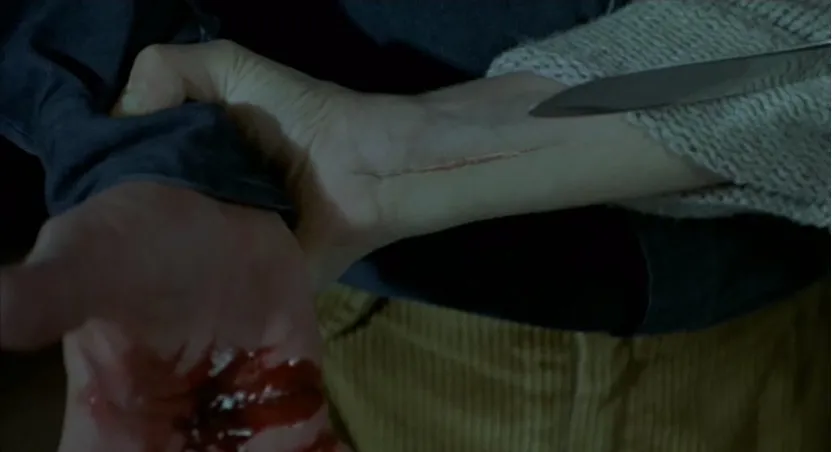
This theme returns in Histoire de Marie et Julien (2003). Who could forget that shot: the woman slowly drawing a blade out of the tightly clenched palm of the man who has attempted suicide, then, even more slowly and firmly, carving a long, narrow wound into her own wrist. She fixes her gaze on the man’s face. Unlike him, the pain visible on her face does not come from the physical wound, but from the irrevocable necessity of the act itself, from the decision to cut. In order to make him see the Law of the world, she does not hesitate to slice the world open for him. The world reveals itself to lovers through a wound. Just as night is discovered behind the curtain of day, time can no longer flow unidirectionally without anxiety. Through a single gesture, Marie makes herself disappear from Julien’s world. Here Rivette uses the repetition of a scene to separate the time of the living from the time of the dead. Are lovers condemned to live only by pursuing the gap between the two?
Yet this act of incision, from “you” to “me,” is fully realized only under the gaze of the spectator (or rather, under the gaze of the cat). The cat does not distinguish between the bodies of the living and the dead; it sniffs Julien, then licks Marie. By placing the cat between the two bodies, do we not sense a kind of resolution in this choice? Does this not suggest that, through the completion of this act, the lovers express a determination to defy the Law?
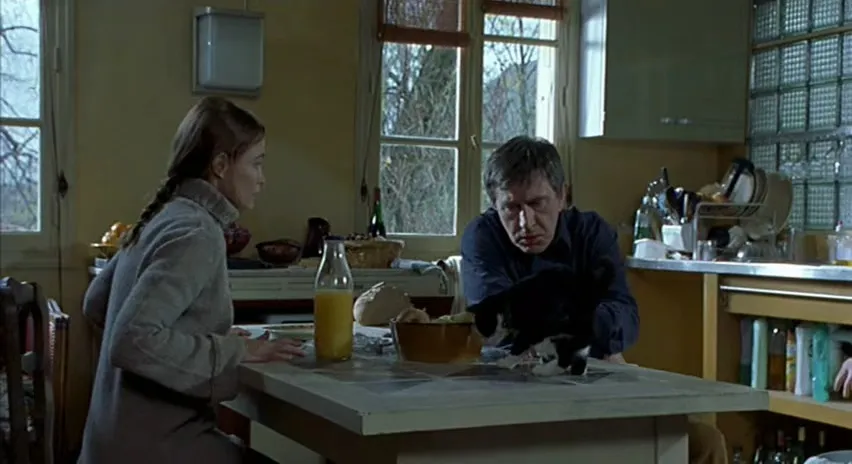
You and I do not belong to the same world; I could vanish from your world simply by covering my eyes. Yet in the immediacy of pain, we share an intimacy that surpasses all that came before, within this unbridgeable separation. Even if the cruelty of the Law forces lovers to cut into their own bodies, the action reclaims itself through its steadiness and resolve. This is no different from deciding to share a single breath with another. In the kingdom of love, every movement acquires a value that exceeds all others. Everything is about opening, sharing, and creating voids. While making love, Julien tells Marie stories. The stories signify nothing; the lovers’ whispers open gaps within language, secrets shared only between them. Foreplay is at once wordplay. The boundary between language and body is continuously reinscribed in this process. As fingers glide across skin, the meaning of words is endlessly deferred, exchanged, and rewritten.
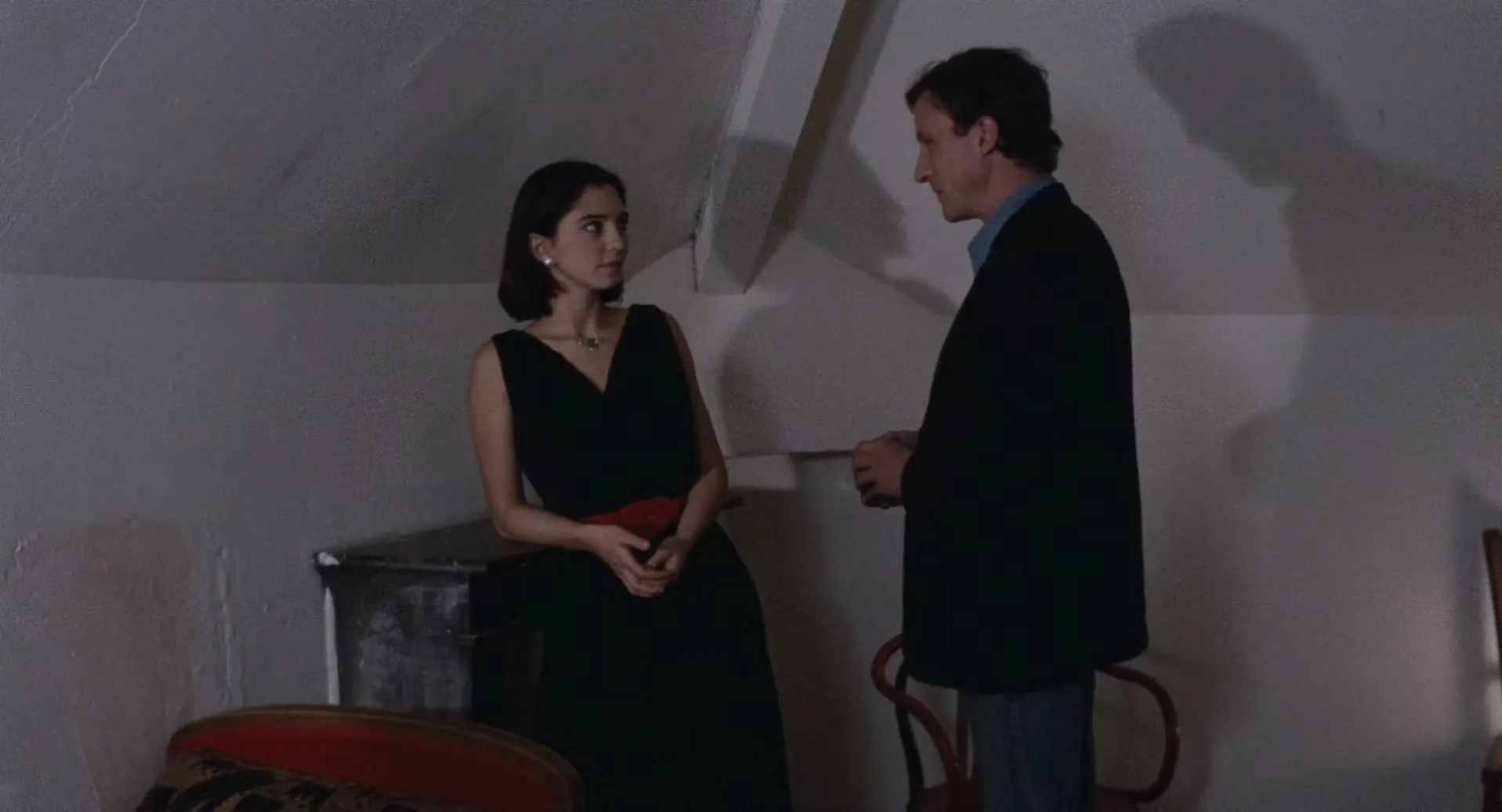
When Marie, in the attic, tells Julien—who is trying to hang himself—“The Law works beyond us... go away!”, do we not feel a certain solidity, a resilience, in her posture? The Law speaks through her body, yet her love for Julien transforms the Law into a form of protection. Whether carving a wound or issuing a command, Marie never fully knows how the Law operates, yet she annotates it without hesitation through her actions. Unlike those charlatans who claim that the world operates according to a Law greater than any individual, and that ordinary people are too foolish to grasp it without being initiated into its mysteries, lovers feel the Law more directly than anyone else. When tears finally turn into blood, how can we not be moved? Perhaps love does not transcend the Law, but appears instead as one of its interpretations. Yet in this interpretation, love invents a Law belonging solely to two people, in an unprecedented way. Catherine’s hand—that hand mangled by glass in the original novel—seems, at last, to find solace here, in tears.
2
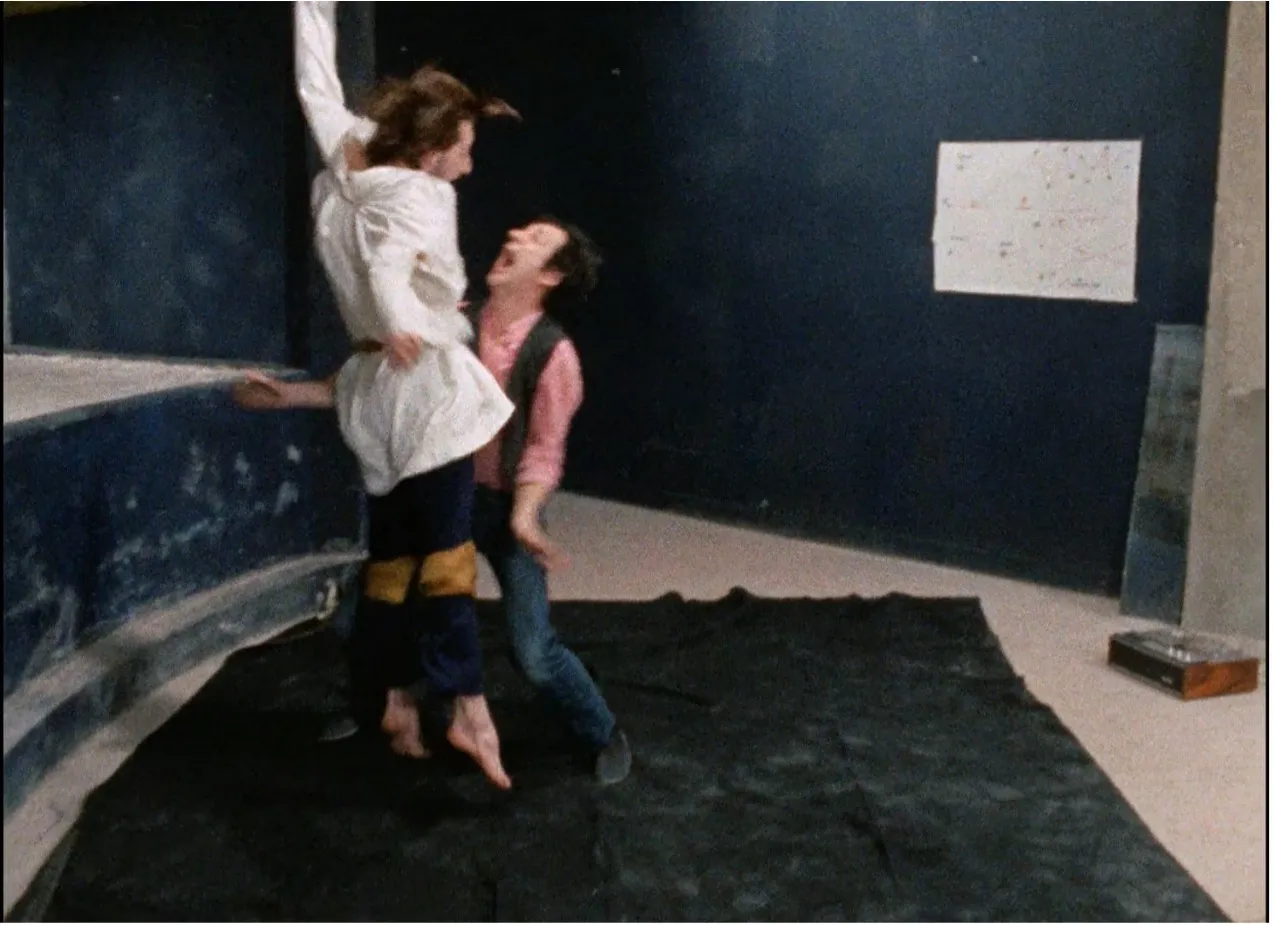
Strange gymnastics: accompanied by the monotonous beat of a drum, bodies twist, bend, and roll. It is a collective action, resembling a form of ascetic discipline. Preparation for what? We must say: simply for a mode of communication, so that each body may share a position outside itself. Then, at the moment of dispersal, the theatre suddenly reveals itself. Two bodies collide, and what resonates is a line from a play in rehearsal. The actors stage this moment playfully. They steal it from the script, not to lock it away in another safe, but simply to displace it. In exchange, they inscribe something new in the blank space left by this displacement: something initially shared only between two, but which spreads through the collision of bodies. It is a line from a script, yet it sounds like this: this is my body, I speak my body, and in speaking I offer my body to you. Through witnessing, it is shared again, without any diminution. Indeed, it becomes something else entirely through this re-sharing.
A displacement, and yet closer to the truth of the theatre. Or rather: the truth of the theatre occurs in this instant, as if it had never occurred before and will not persist afterward. Thus this act of revelation is simultaneously a puncture. It slits the curtain, but does not burn it down, so that when the curtain falls again, light may still pass through. It reveals itself only to undo itself.
3
We cannot locate a true beginning in Rivette’s work. The story always begins in the middle: Paris Belongs to Us (1961) opens with the death of a friend; Out 1 (1971) with a fragmented group; Gang of Four (1989) with a captured intellectual (Roger Knobelspiess) in the world Rivette inhabits; La Belle Noiseuse (1991) with an unfinished painting; Histoire de Marie et Julien with a love affair already prematurely ended. From his first feature onward, the theme of failure, most often the failure of the work itself, seems to chart the entire topography of Rivette’s concerns. Did he not say that the work is only what remains?
Yet this does not mean that we cannot begin to speak about these works. What emerges across Rivette’s oeuvre is not the idea that “the beginning is already the completion of the beginning,” but rather that “the beginning is always already the failure of the beginning.” Failure has already occurred. It occurred off-screen, in the many moments before Rivette picked up a pen or raised a camera. But it continues to occur, inside and outside the work, descending upon us without rest. The wound of the world. We might say that this is, first and foremost, the failure of Europe. Yet today the terror produced by this failure has not diminished; it has merely changed its face and its voice, quietly suffocating each of us. Words fracture; night casts its shadow over everything we see. And yet cinema begins. From within the night, cinema struggles to emit its own light.
For Rivette, the question is not the absolute unrepresentability of death, but how to find a gaze appropriate to bodies that watch and perform death. Cinema exists like a form of survival. We, the survivors, are cursed, compelled to speak without end, to search without end for that workless work (désœuvrement) that can only be found where representation as mere appearance is abandoned.
It is for failure that we begin to work. It is for the dead that we begin to write, that we begin to film. Failure shatters appearance, and from that point on everything splits into multiplicity. The beginning does not exist, but traces remain. An approach, a collision, a touch, a break: what Hélène Frappat calls the moment of truth (moment de vérité), scattered and disseminated throughout Rivette’s work, so that it may be disseminated again. Harvest is impossible. Constituted in sharing and existing only in sharing, these moments of the present (moments de présent), as Frappat aptly names them, give nothing beyond their presence.
Ordinarily, a work demands that we plan in advance to capture it, fix it, possess it, or be possessed by it. Rivette instead presents the failure of the work. His characters, players and wanderers, are often energetic, yet they are exhausted by the demands of the work. The moment of occurrence has always already escaped those demands. Any attempt to retrieve it is futile; only traces remain. The one who acts must at the same time become the one who lies down, expecting nothing, simply waiting. In this waiting, something arrives.
4
What is it that arrives? To answer this, we must first find a work that poses the question with the appropriate gesture: a film about waiting, possession, and the work itself, La Belle Noiseuse.
At this point, we might say that we are beginning to speak about cinema. But how does one begin? To speak of cinema, it is difficult to avoid the question of how cinema itself begins. How can one speak of a beginning? When we finally follow Frenhofer’s gaze, as Marianne remarks, he is only looking for something “seen before”: a contour, an image, a face. He searches for a brushstroke (“What is a brushstroke?”), a stroke that allows him to follow the trace originally inscribed in thought, to correctly draw the first line on the canvas, that is, to begin.
Touching, piercing, carving: these actions form a tightly linked sequence in Rivette’s work, extending into other pairings and oppositions: secret and conspiracy, truth and untruth, sharing and possession. Frenhofer declares that the true work must pursue “cruel truth,” and that when the final work is finished there will be blood on the canvas. He wants to “reach the sky.” His studio stands on elevated ground, commanding a wide view. At night, the trees breathe like the sea. Inside, the space is open and flooded with light. A clearing is made at the center, where the model’s body is arbitrarily arranged. Light enters through the skylight, setting the space into a play of brightness and shadow. In this church-like studio, Frenhofer prays that the scale opened by the sky will grant him truth.
To pierce flesh with the gaze until blood flows, irreversibly, does this not resemble a sacrifice? Blood introduces an excess that cannot be taken back. When the old painter says, “there will be blood on the canvas,” is this not what he means? A will to truth, relentlessly seeking possession, pursuing, manipulating, stripping, and piercing. To nail truth into a body, it does not hesitate to negate what was once most cherished.
Yet this sacrifice is interrupted halfway through by the offering’s own demand to appear.
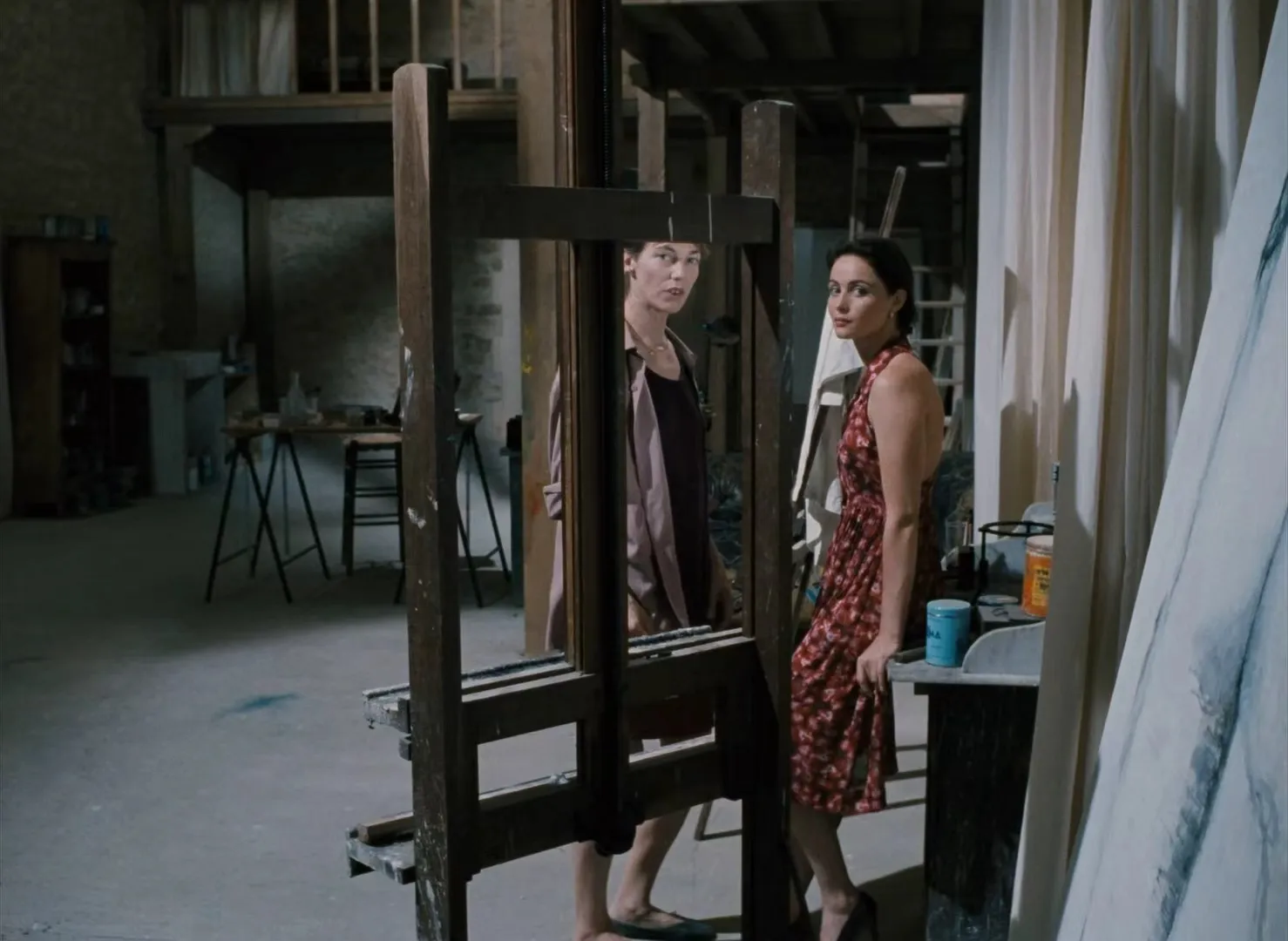
To paint is to carve. Every line is a trace of thought, a distribution and weaving together of forces. The viewing body responds to the viewed body, waiting for an arriving form, constantly producing displacement and differentiation on the blank surface, constantly renewing itself. Each stroke is a new beginning. Long before the final painting begins, countless scratches and countless drafts have already been incised. In order truly to begin, Frenhofer and Marianne must traverse a thorny terrain with difficulty. To encounter the arrival of the work’s form, they must first stray from the path. Only when we see Marianne’s final posture can we recognize that the “thing seen before” was precisely her gesture of leaving the studio.
Strictly speaking, what we see is not a representation of that gesture, but a following of its trace, a trace already interwoven with countless others. Liz inside the frame and Marianne outside the frame are not metaphors, but conditions for the possibility of forming an image. All the earlier images, Liz and the silhouettes of many others, await their form in the final work. Even if they are destined to be painted over, this obliteration must be understood as an affirmation.
The work fails. Only after failing does it begin again. In order to find its form, it must abandon its wholeness. It must allow itself to be interrupted; it must make itself into an open body (here we recall the importance of the Chimera figure in this film) so it welcomes the intrusion of the other. Marianne is that intruder. The painting has begun long before, but the film begins with Marianne and ends with Marianne. It never truly belonged to Frenhofer.
We first see the game between Marianne and Nicolas. It is a stifling afternoon. Nicolas is writing in the hotel courtyard, though we know nothing about him yet. Then a second-floor door opens, and Marianne appears with a camera. Stealthily, almost like a thief, she takes a photograph of Nicolas. Later we learn that Nicolas paints from photographs, yet we see only Marianne taking them. Nicolas turns, as if sensing something. They play a game of private detective and surveillance subject. Midway through this game, we hear a woman’s voice: “That day, for Marianne and Nicolas, was not like other days.” The lightheartedness is interrupted, and the landscape acquires an unsettling undertone.
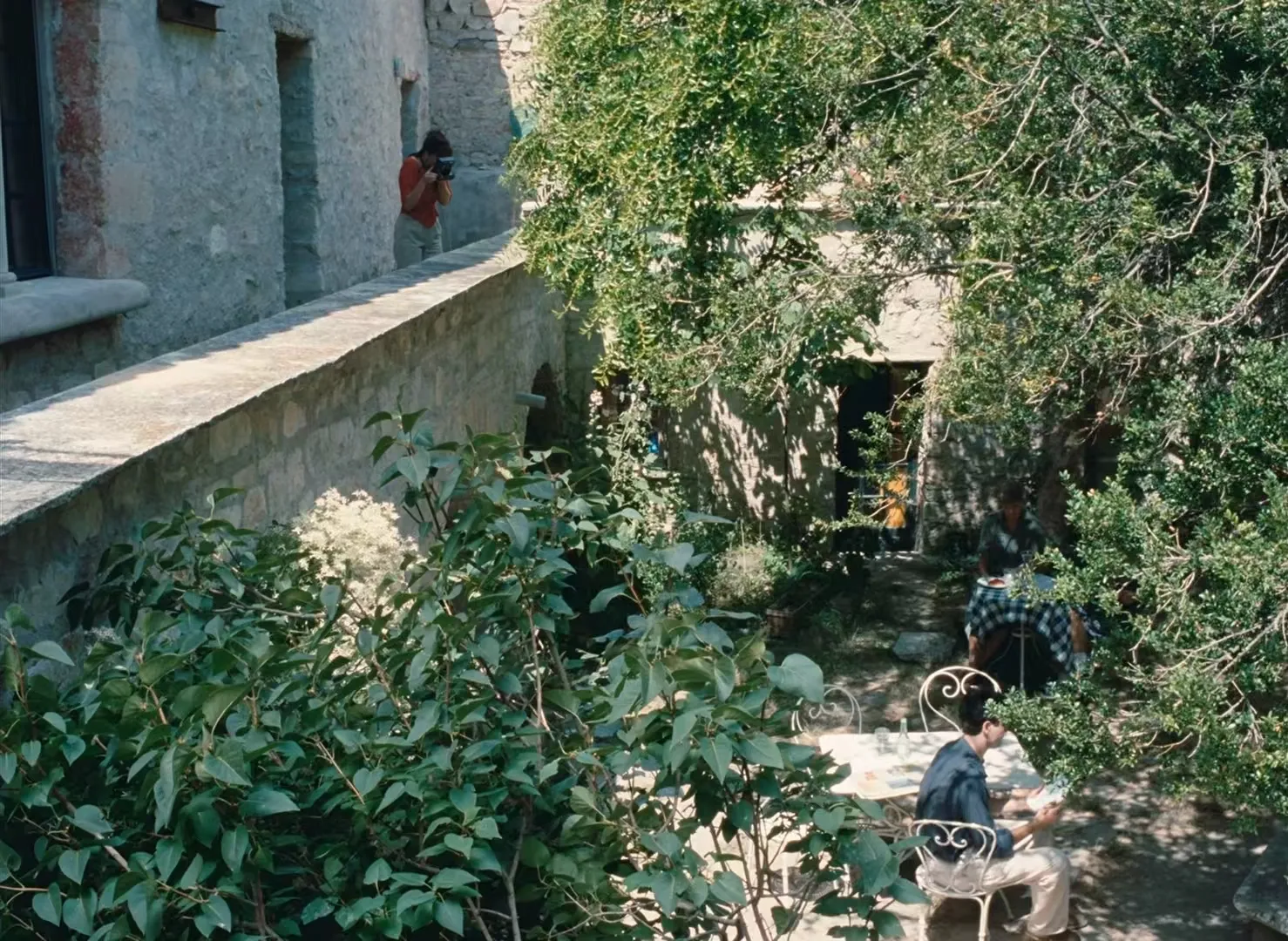
This performance does not last long. It soon reaches its end, which is also a new turning point: the two kissing in the room. Beginning with deception and concealment, ending in love, all appearances undergo the most rapid transformation in the formation of their inner form.
“Well, what else did you want to see?” For this small drama, are the words of the two English women not the most fitting summary? First, we should expect nothing. Second, the secret does not appear in the form of an answer to a riddle. Even if we know that Marianne and Nicolas are in love, we cannot know why she pressed the shutter, nor how such diverse emotions are woven into so beautiful and protean a tableau. As we have said, those institutions eager to convince people that a secret always lies behind things are merely selling an idea: that existence itself promises a mystery, but that this mystery lies too deep for ordinary eyes and must be explained by an initiated elite.
In this small drama, by contrast, there is only appearance, endlessly tumbling and shifting into new postures like the folds of a dancer’s skirt. It excavates nothing, but continuously overturns and reconstructs itself. An eternal surface.
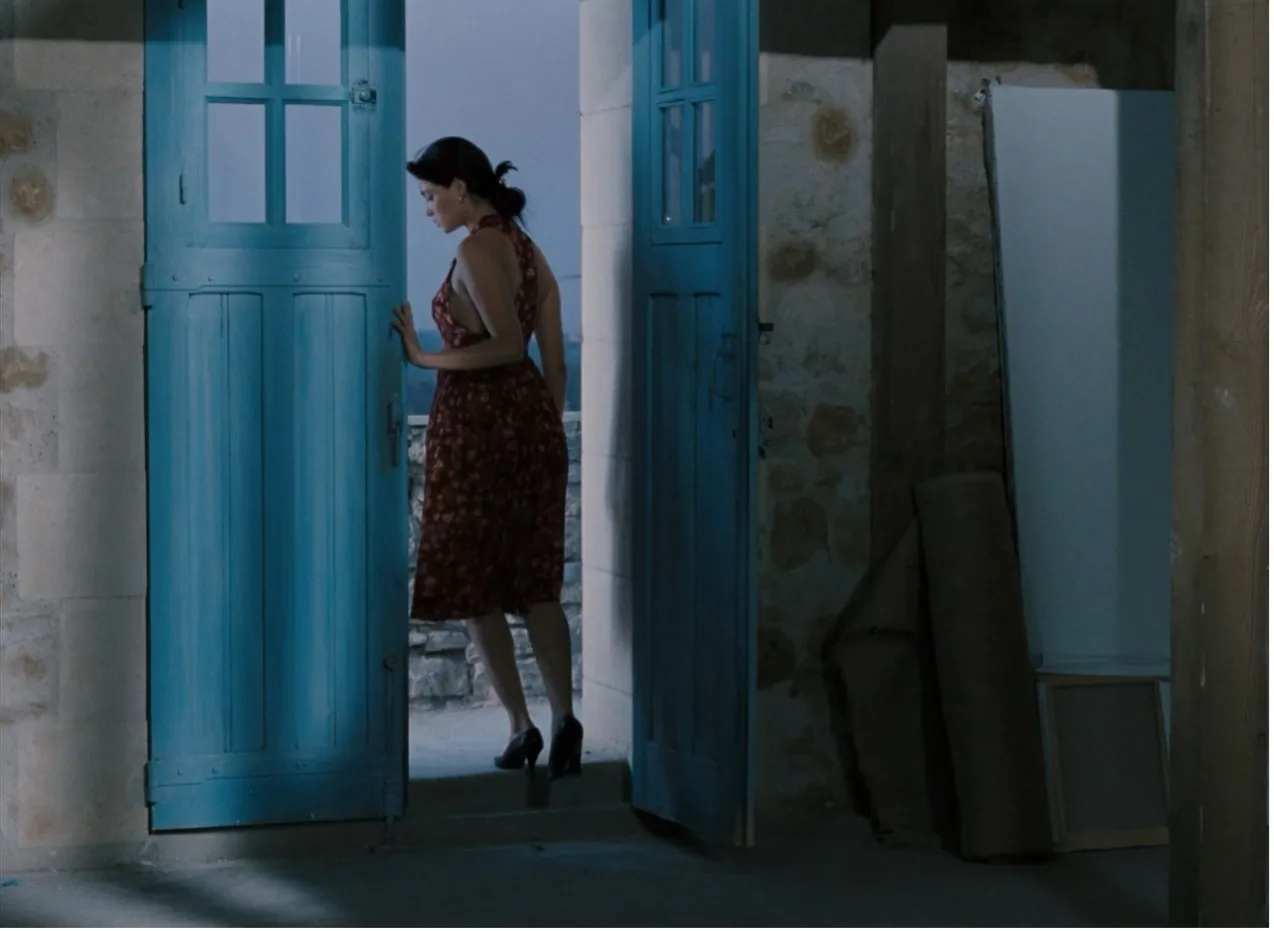
This metamorphosis reaches its peak at the film’s end: “Marianne? That’s me.”
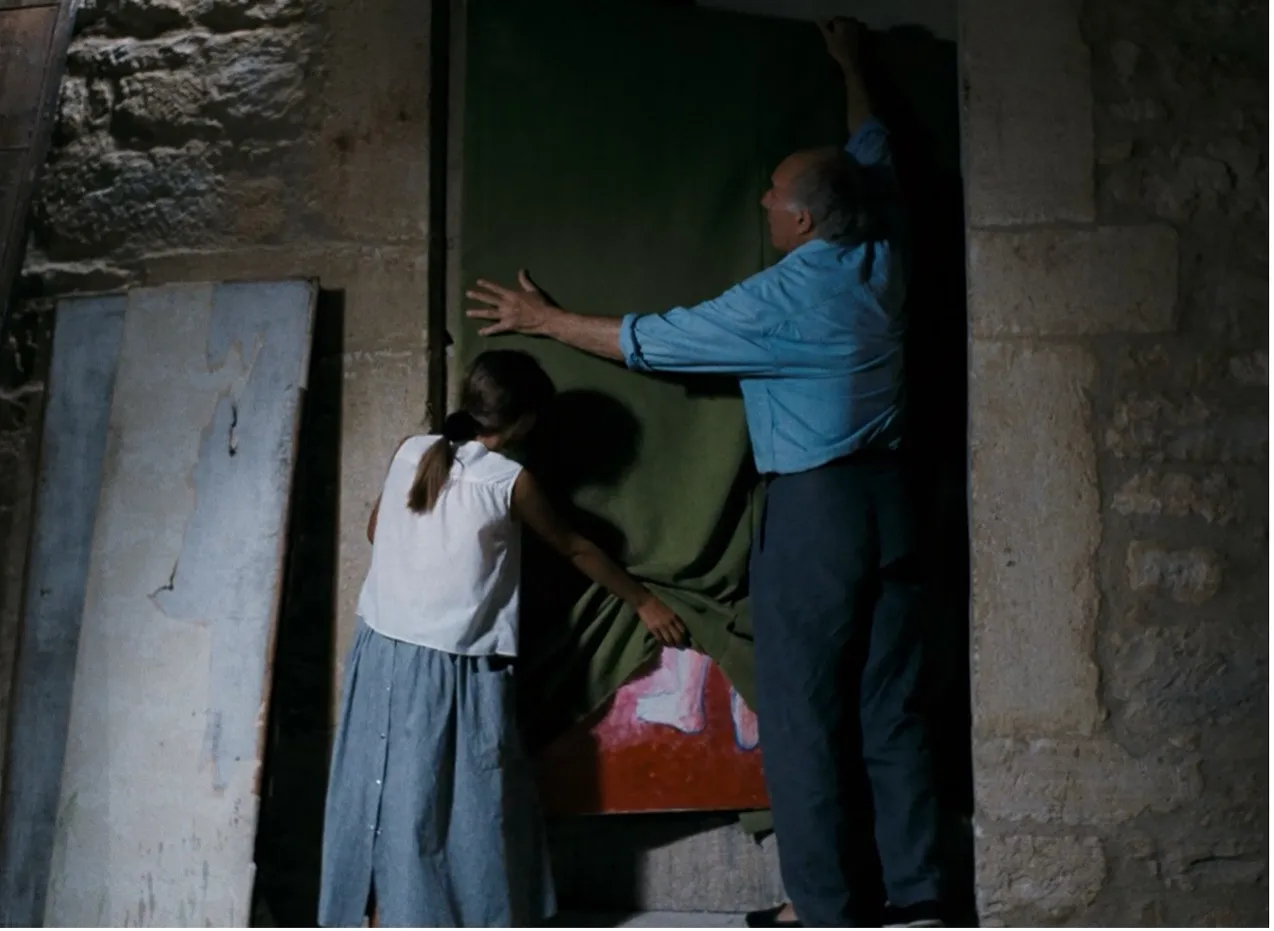
The owner of the voice finally reveals herself. She leaves the studio with an even more decisive gesture, abandons the painting that claimed to be about her, and draws the curtain forever before us.
5
We see only through the curtain. To pierce it, or to lift one of its corners, as Deleuze says, is to be granted “a corner of the real.” And immediately we are brought face to face with the unknown masterpiece. Two feet, revealed only inadvertently, only in an encounter that escapes the greedy, blinding gaze that seeks to absorb everything into its black hole. The feet form a diagonal, offering a twisted posture. One can turn back; one can remain turned outward. In this way, the entire painting, before entering into concealment, that is, into death, casts a final glance back at us and preserves itself within that glance. It becomes the coming thing of memory and contemplation. No longer a work, but the trace of a work. An unfinished, endless work.