The world appears to me like a shard of madness, and I am amazed that reason is not sheer madness itself.
Georges Bataille, Inner Experience
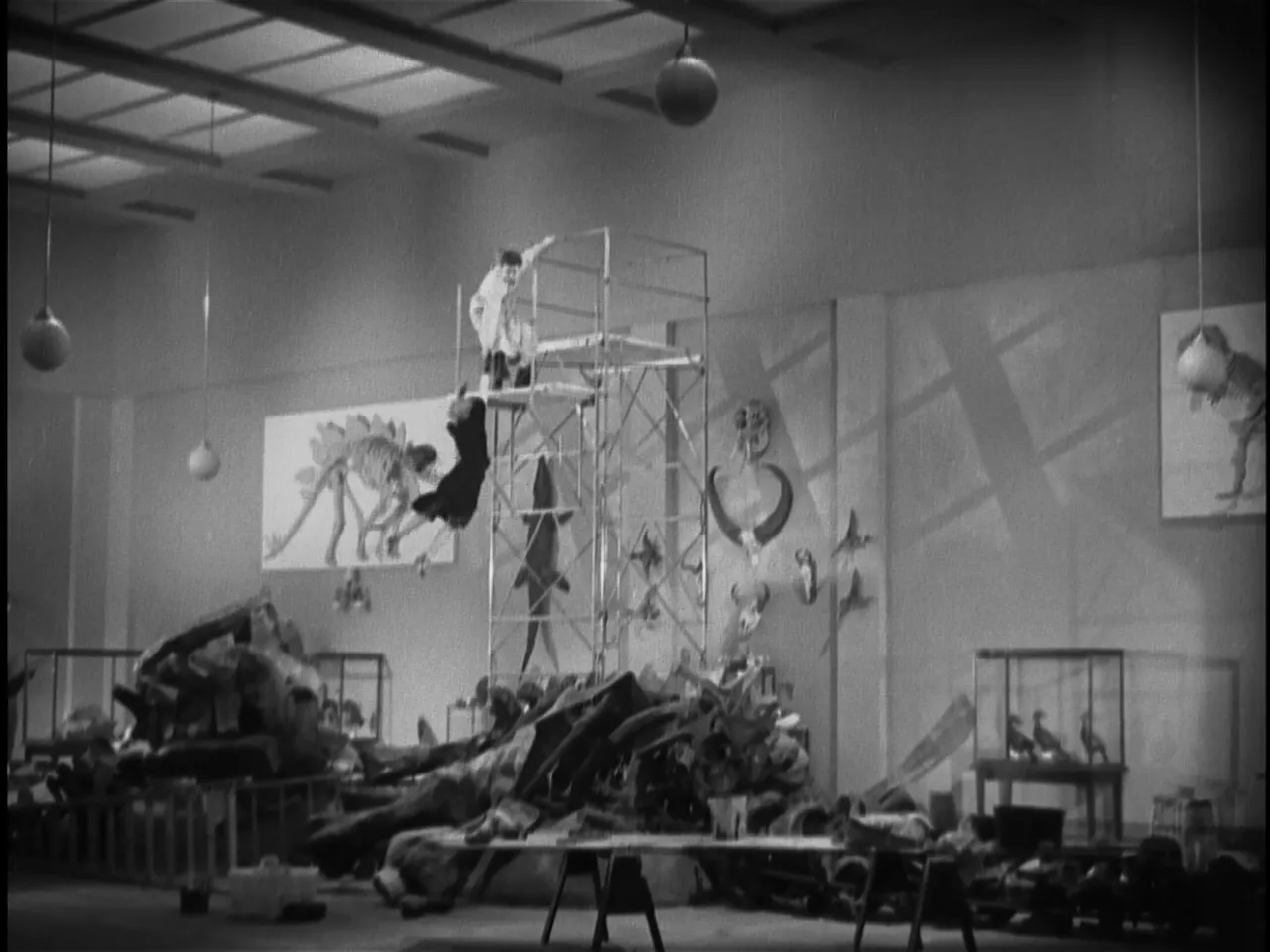
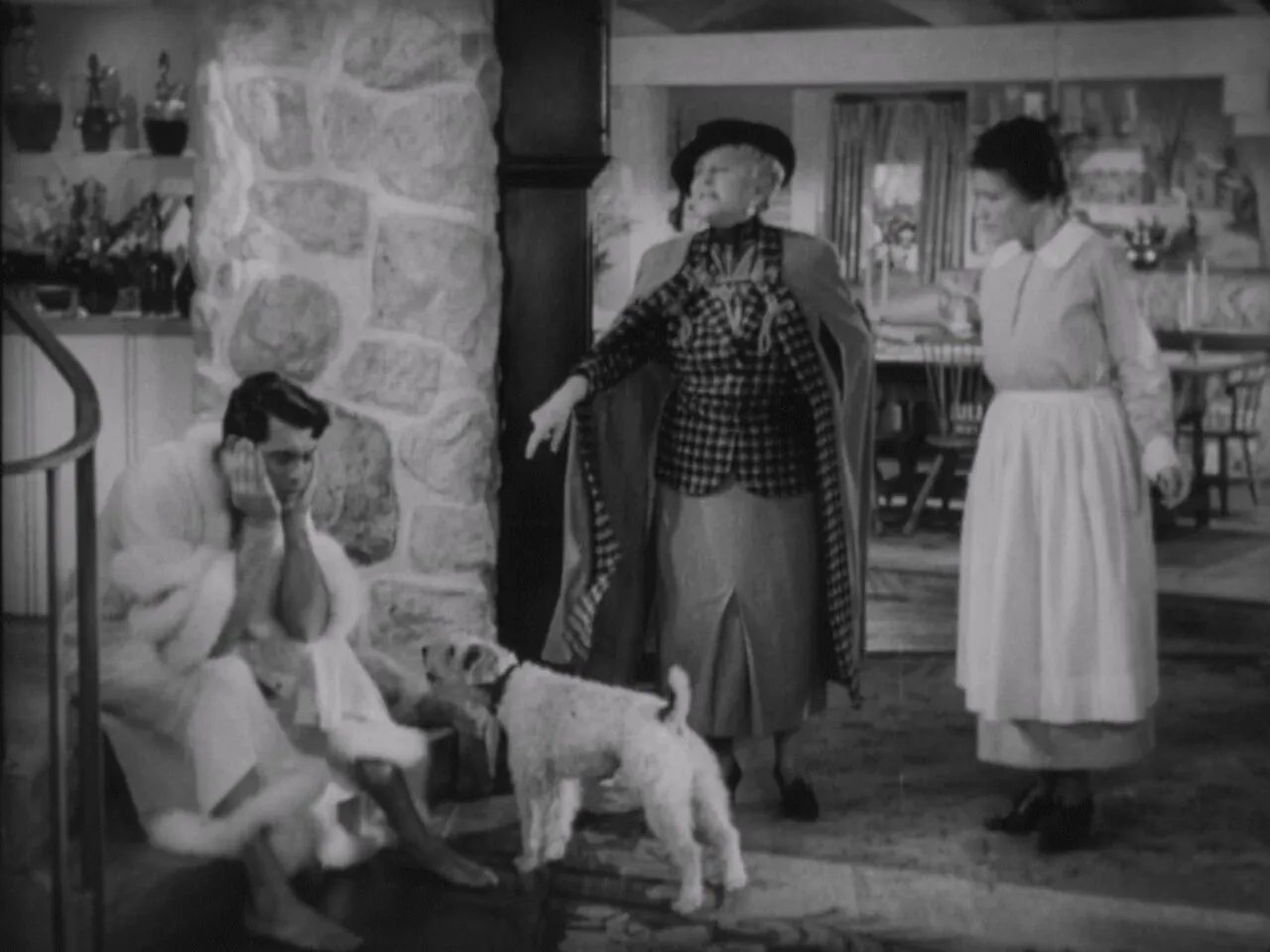
The paleontologist has been contemplating a colossal fossil for quite some time. It is as if some unknown force is compelling him to repeat certain behaviors, urging him to accelerate into the depths of a system. Tomorrow is the day he is invited to move forward—this earnest scientist is about to complete the dinosaur skeleton he has been piecing together for years and marry a woman who is as humorless as himself. Yet, in this moment calling for celebration, no one wears an expression of joy: the fiancée reveres this rigid, ancient skeleton, viewing their honeymoon as a tribute to his work, repeating and rearranging the scholar’s respectable schedule. And so, they wait for the arrival of the final puzzle piece—the intercostal clavicle—so that the edifice of order may be properly sealed and pledged to function eternally.
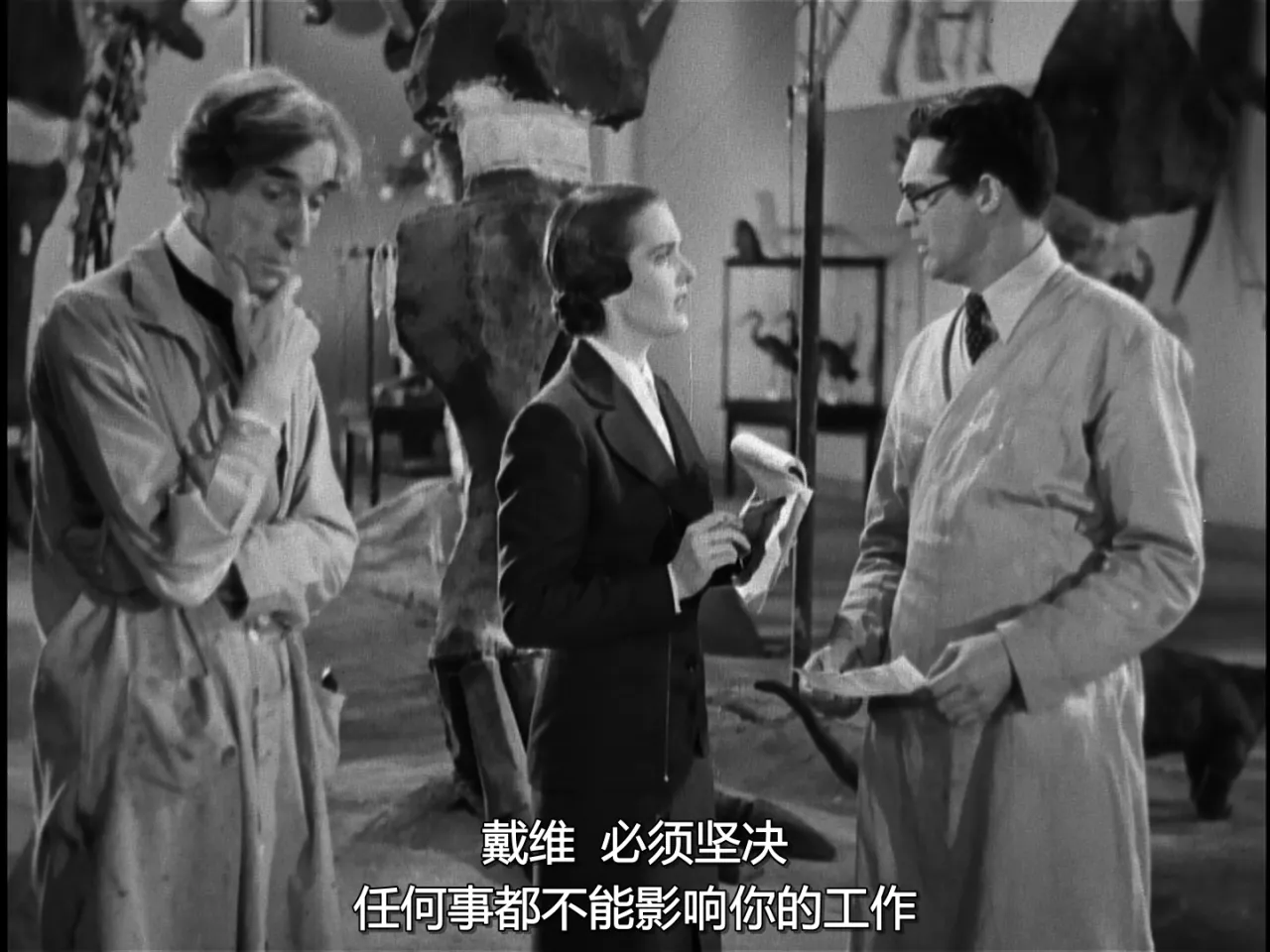
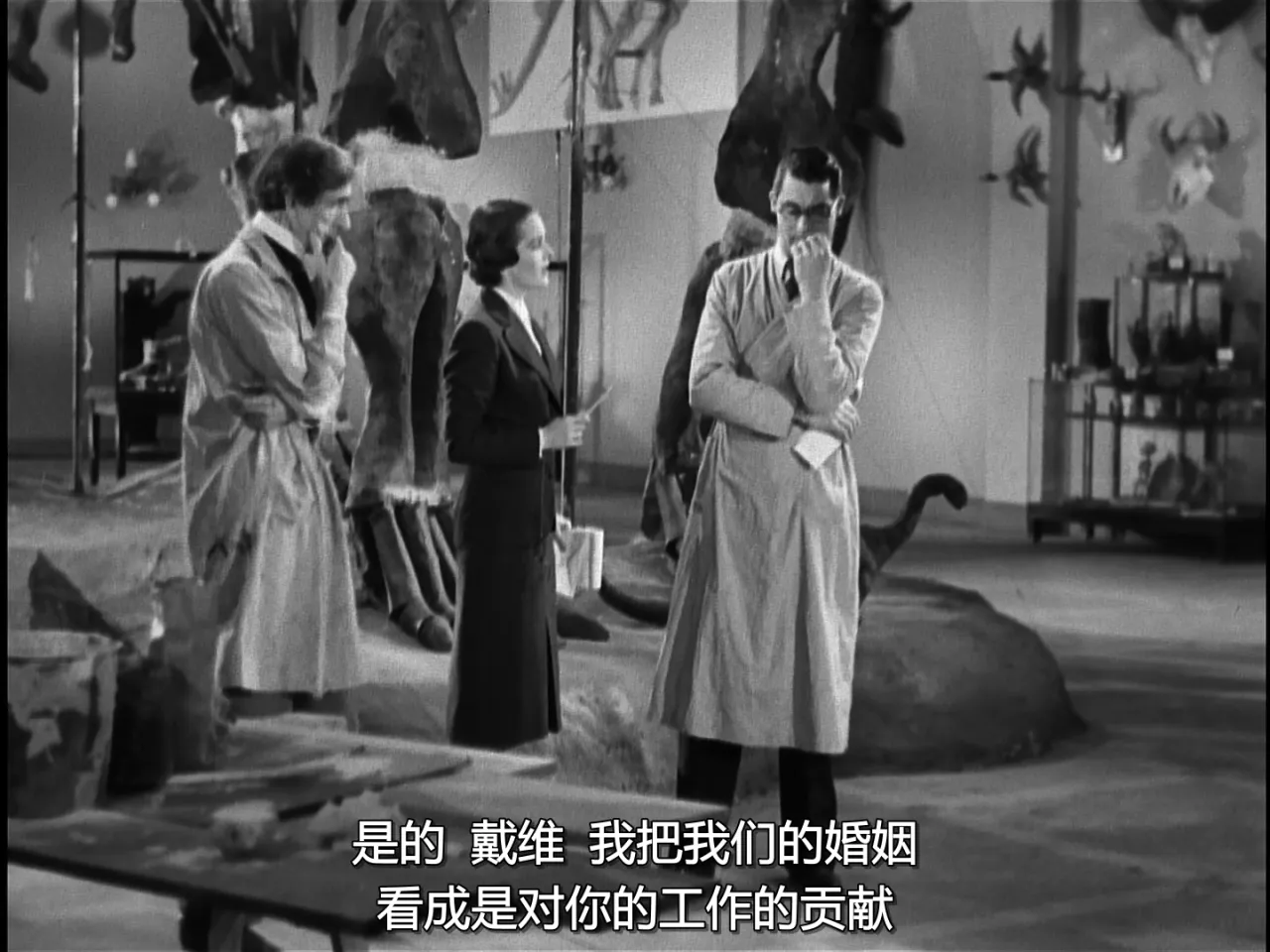
The simultaneous dislocation of the camera and the gaze says it all—ruptures, stammers, pauses, eyes drifting away from the lens, sobbing with an indescribable unease. Marriage is being stripped of the guise of love, replaced by a hollow ritual, an out-of-control performance. Hovering before a massive change, the young scholar’s displaced body and comical movements seem so powerless, so futile, as if he is being pushed toward an abyss by time and inertia. We can only guess indirectly, yet the awkwardness of being at a loss undeniably unearths a doubt beneath the uncanny: How do people walk so boldly into “common sense”? This sense of hasty and cold alienation parallels the encounter in Franz Kafka’s The Castle: K., arriving in a strange village, attempting to be acknowledged as the official land surveyor. During his attempt to “approach” the castle and its center of power, K.’s relationship with a woman develops rapidly, and they plan to marry, even though they have lost the reason to do so, and this marriage plan fails to elicit any concern or blessing from the villagers.
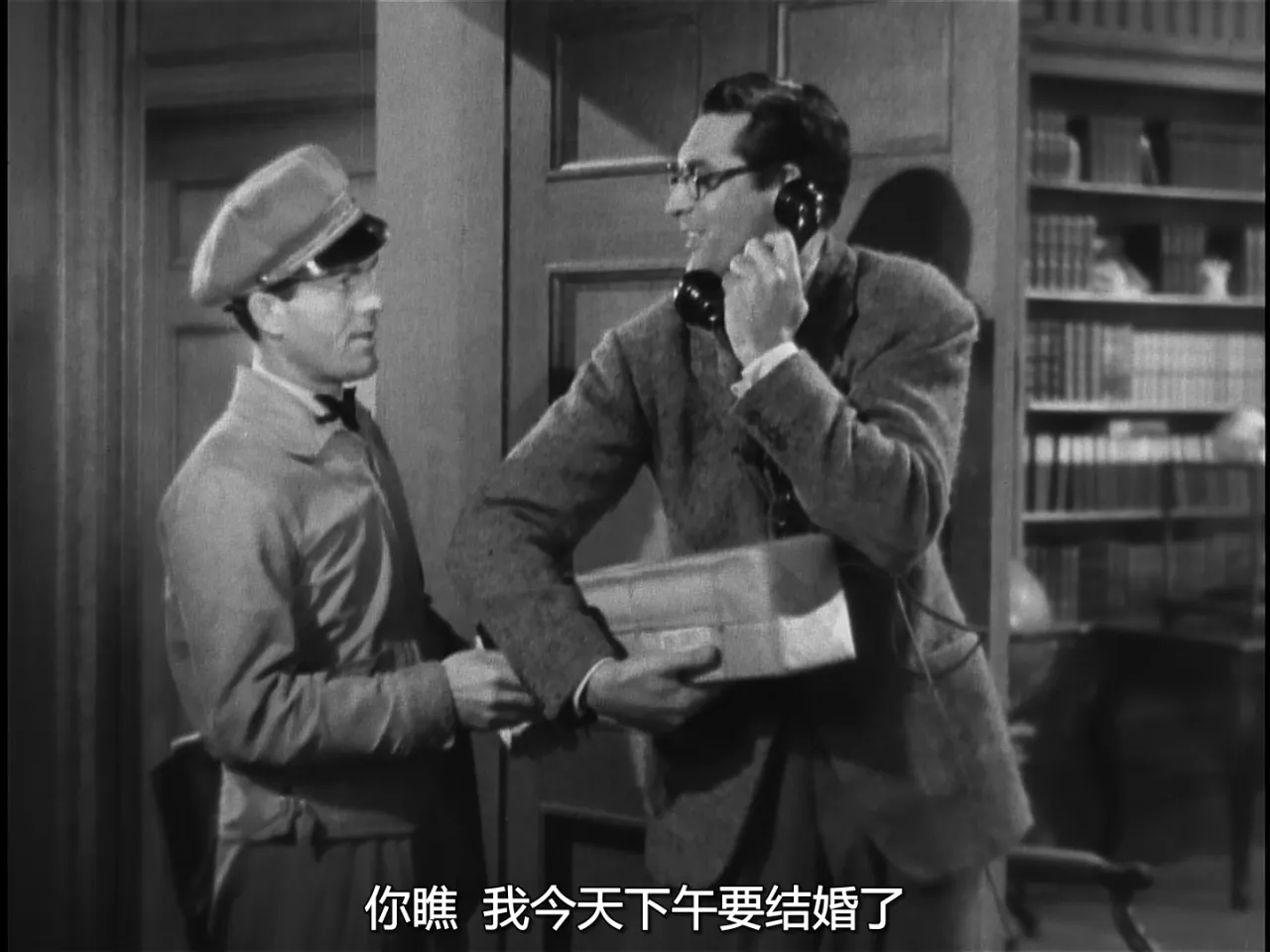
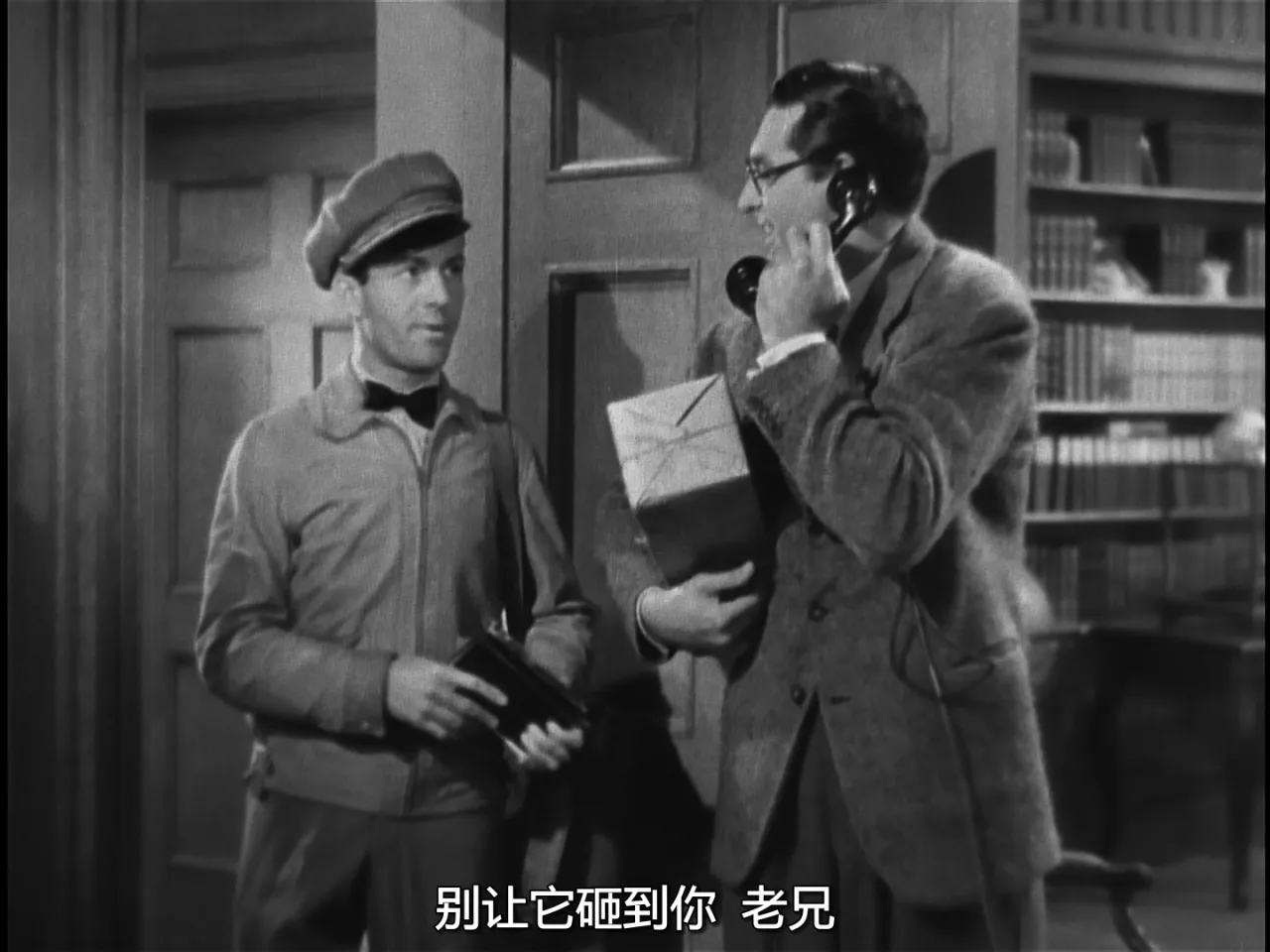
Linking Howard Hawks’ Bringing Up Baby [1938] with Kafka to explore their kinship stems largely from their shared instinct for humor. For modern people who have accepted too many theories about bureaucracy, alienation, and absurdity, the workings of entrenched knowledge and power have long cast too many shadows over life. Consequently, even ridicule of laughable situations is laced with bitter contemplation; even the most rebellious humor conceals a certain reality. We can scarcely imagine Kafka’s friends rolling around on the bed laughing while he read his works to them, nor can we believe that Kafka’s melancholic face could appropriately fit a smile. Facing the gaze of the world’s profound impermanence and ineffability, poking fun at the absurd often constitutes a co-opted, compromised experience in itself—in other words, we can hardly laugh heartily at absurdity anymore.
Regarding the fundamental rupture of reality, contemporary film comedy often places it in empty, rigid, didactic voids: Roy Andersson, who condenses social tableaus into formal symbols and highly visualized frames, seems to build a doomsday allegory machine under precise assembly; while Aki Kaurismäki, always heavy and trapped in social critique, features characters self-enclosed by reticence, alienation, and passive circumstances. Such cold, black humor merely exposes a thorough sense of insignificance in the face of the ungraspable. The audience’s laughter either vanishes into a naked, infinite wilderness or ricochets off cold metallic surfaces as a monotonous leftist reverberation.
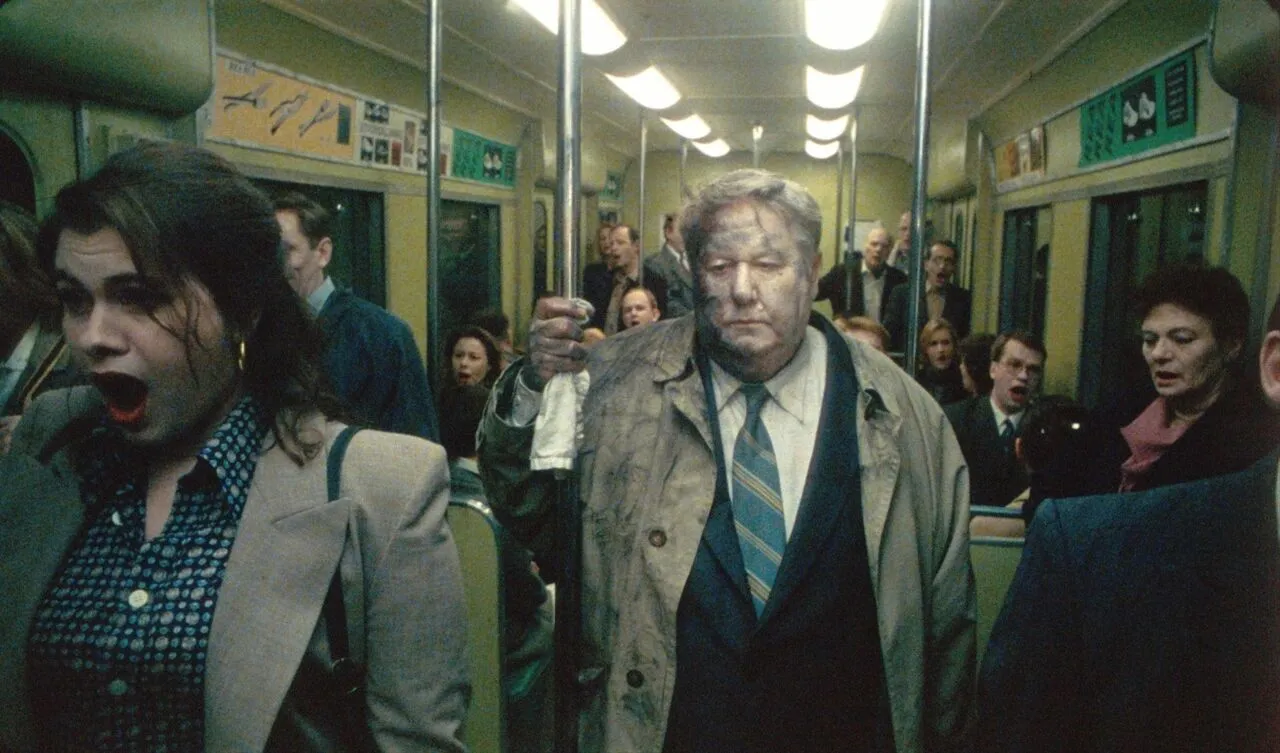
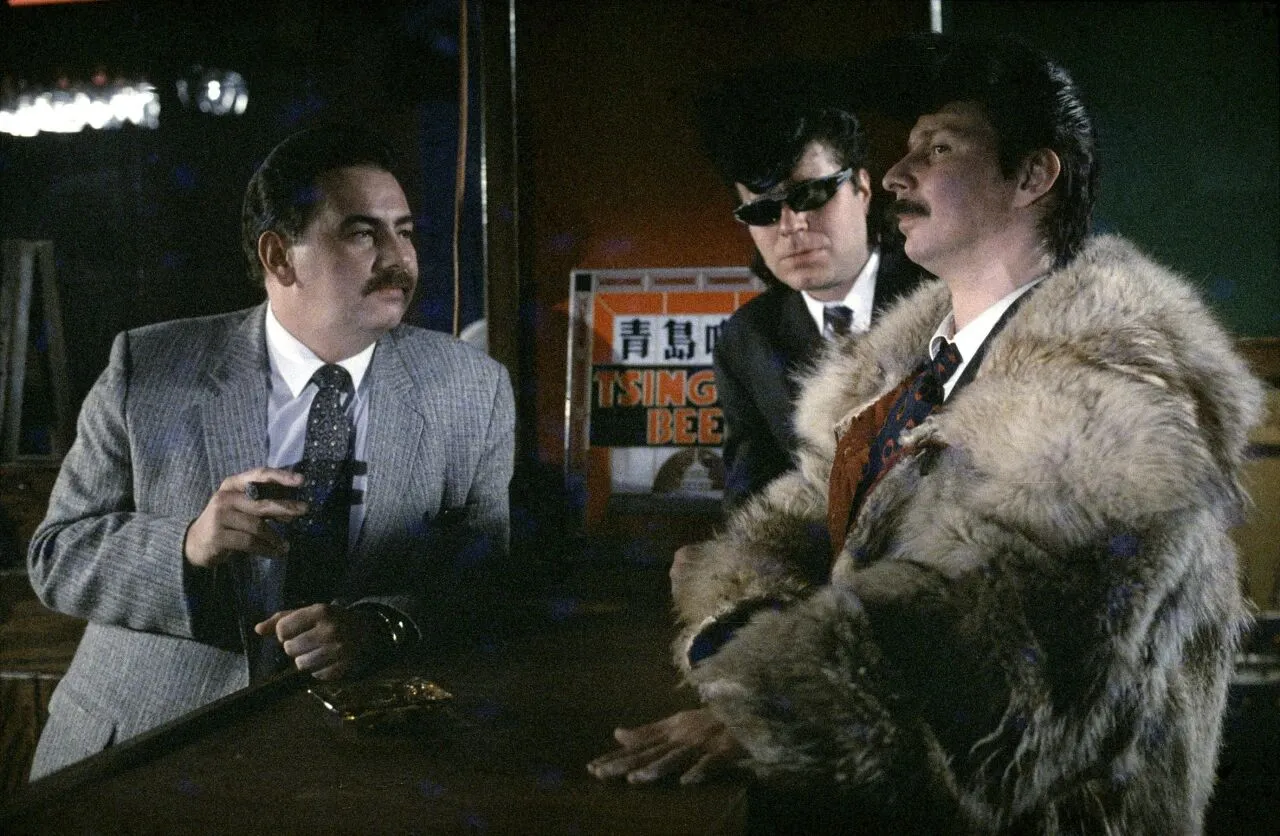
As a subversive challenge to the objective order, turning humor toward ecstasy is a distinct quality Hawks possesses in his reflection. Here, he walks alongside Bataille: “Laughter is a revelation, it opens up the depth of things.” Existence henceforth opens up to unknown regions. The spirit ceases its compliant movement, moving not only toward a refusal of common sense—a dashing refusal of “this” over “that”—but also divesting existence of its seriousness, walking into a more open, accidental, and strange experience. The fissure between language, existence, and meaning constitutes the simplest device of comedy: speech, limbs, and laughter, filled with misunderstanding and dislocated interactions, triggering a chain of deeper chaos.
Two warders were devouring his breakfast. “Why doesn’t she come in?” he asked. “She isn’t allowed to,” the tall warder said, “since you are under arrest.” “How can I be under arrest? And in this particular way?” “Now you’re starting all over again,” said one of the warders, dipping a slice of buttered bread into the honey pot. “We don’t answer questions like that.”
Franz Kafka, The Trial
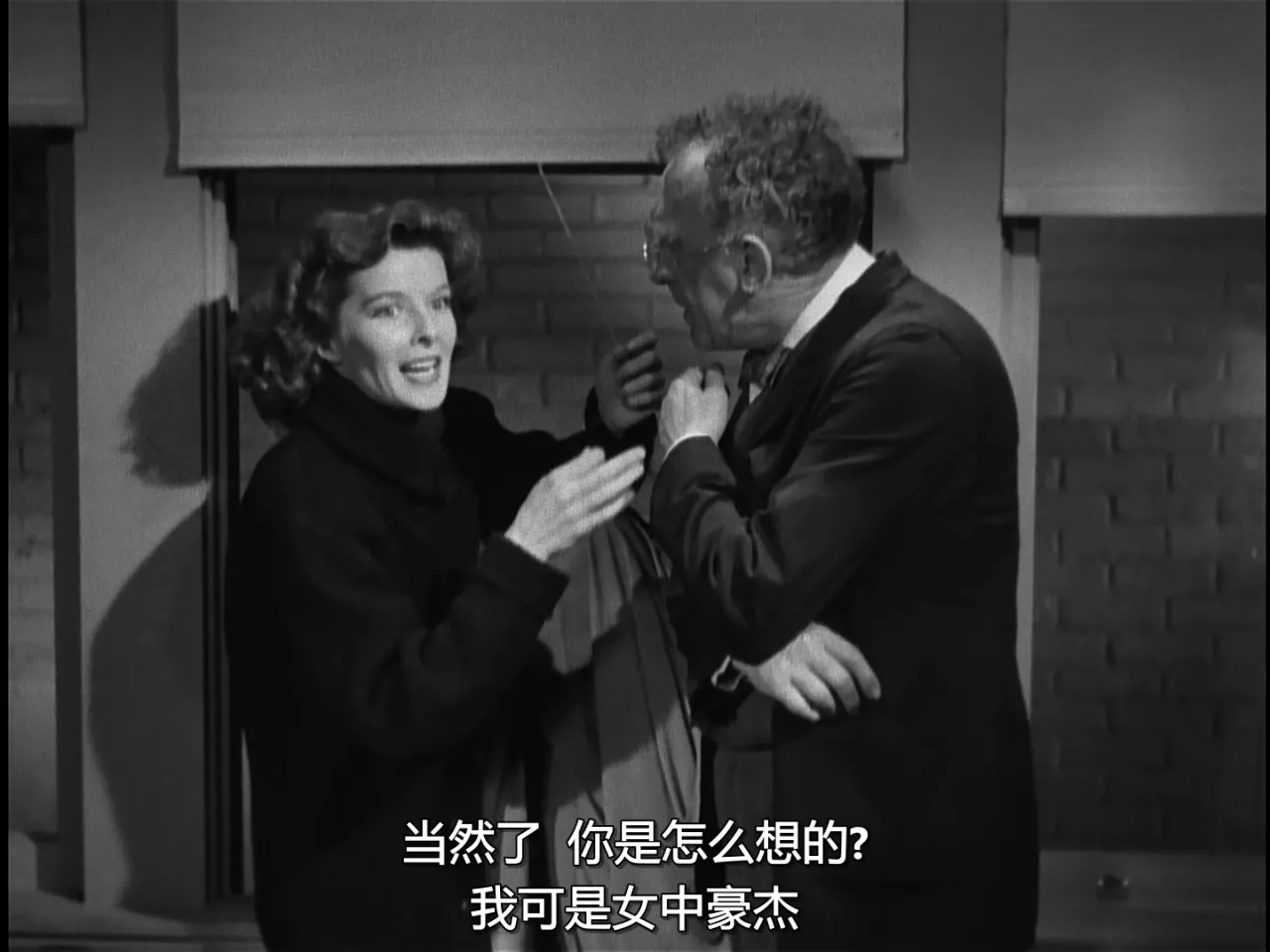
If K. being arrested is an absolutely nonsensical scene—the police as unbothered as old friends visiting, refusing to explain the charges, eating K.’s breakfast without scruples and finding nothing inappropriate about it—then one cannot ignore the strange sense of dislocation carved out by Susan’s entrance: an eccentric heiress who never answers your questions, ignores norms, guidelines, and common sense, and does as she pleases within her own logic of action. Thus, we quickly capture the difference—the former is always chilling, while the latter seems merely unreasonable. The subtlety of this shift lies here: compared to a despair trapped in absurdity, finding escape in laughter can keep us equally vigilant. Before our eyes, the world twists into an uncontrollable vortex overriding escape with an inescapable objective force, maintaining a silent resistance forever; Hawks, however, insists on initiating a chase game of active challenge, even if this subjectivity is destined to be mocked, weakened, or simply fighting to maintain a posture.
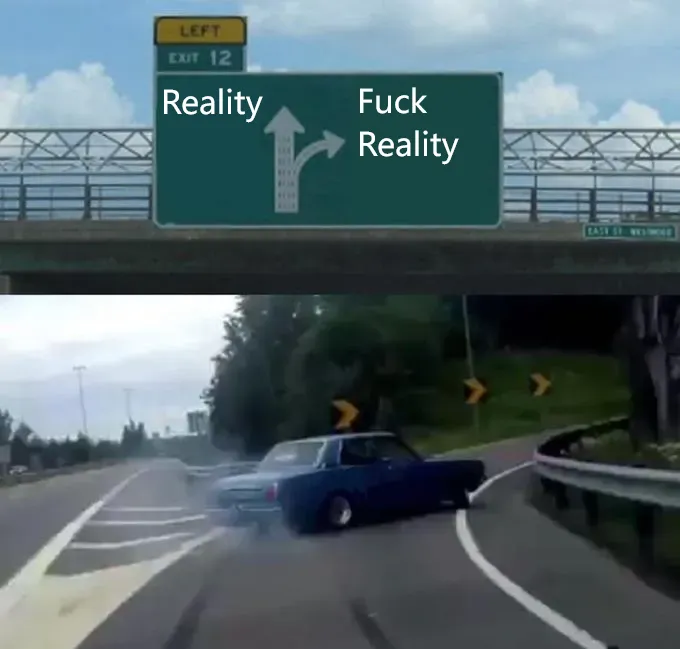
For Kafka, the ceaseless bureaucratic machine always hints at the absurdity of human existence with a terrifying posture. K. tries to take control, but the mystery and complexity of the judicial system exhaust him. He realizes he is trapped in an endless maze, spinning in circles, halting helplessly before this fractured place of exile. As a similar absurd situation, imagine an extremely complex automated phone support system: you obediently follow the mechanical female voice’s instructions, while endless commands greet you like an abyss, one after another. The button to return to the main menu and be released feels as distant as a ghost... It is a torture of stripping away layers; every step pushes you further from the problem, and you, like a hopeless pilgrim, can only watch redemption slip through your fingers.
“Absurdity only has meaning in the feeling of the failure of reason” (Bataille). The system wraps absurdity in a rational guise, making it the indisputable word: Reality. However, Hawks inverts all this “known melancholy,” refusing the further collapse of The Real, and resolutely walks to the other end: leaving the system, leaving reality. Thus, we encounter a bizarre velocity—directly manifested in Susan’s chaotic car crash by the tennis court, the eventually collapsing skeleton, her witty banter and giggles, and her bird-like, light footsteps. She rips open a seam of madness with the most undignified farce, never gently submitting to the framework enclosed by society, taking the failure of reason as the only virtue, tending toward a power, surplus value, and abundance overflowing from the self, infecting the audience with how to regain the free air of laughter.
Laughter often originates from the opposition between the mechanical and the living. “The comic is that side of a person which reveals his likeness to a thing, that aspect of human events which, through its peculiar inelasticity, conveys the impression of pure mechanism, of automatism, of movement without life” (Bergson). There is a secret flow on the screen unfolding around the body, constructing a “game space.” We cannot help but notice how the limbs of this screwball couple collide and confront each other in every corner of the image, forming a synergistic, “always in the midst” kinetic power source. The machine is not endowed with life, but with movement. Cold, pure order, tireless. Every engagement of the machine’s gears allows no error; every operation is the click of technical repetition. And a rhythm possesses its own rate only when related to other rhythms. If the constraint of the image always wraps itself in the melody of reason, we would never detect this variation of uncertainty, chaos, and improvisation from the start: only when the rhythm is being intervened in and disturbed does the rhythm dissect itself.
The reunion, as the start of the variation, holds an irresistible subtle tension, even revealing a hint of dangerous seduction, like a long-prophesied moment of dislocation, a starting point one would return to regardless. The table, the chairs, the plates—all these minute things seem to watch them in silence, saying nothing, while a transformation is secretly, impatiently gathering and generating. With the subtle move of the purse magic trick, Susan opens a door, summoning the prologue of this stage play—the magic of doubling captured on film. It is as if she is the director of this absurd drama, and David is merely the actor swept into it. The body, as a special node that cannot be ordered by power, is always seen as the revolutionary site of the relationship between the subject and power—the purse falls, the hand attempts to grab some symbol that supports the world, but obviously to no avail. Space becomes an extension of the character’s limbs. Every comical mistake, every physical dislocation, is magnified through the changes in the frame. Between the rapid cutting of shots and the abrupt shock of close-ups, the image no longer serves as a fragment or imitation of the world, but constructs an autonomous field independent of reality, where possibilities hidden in the depths surge like a tide.
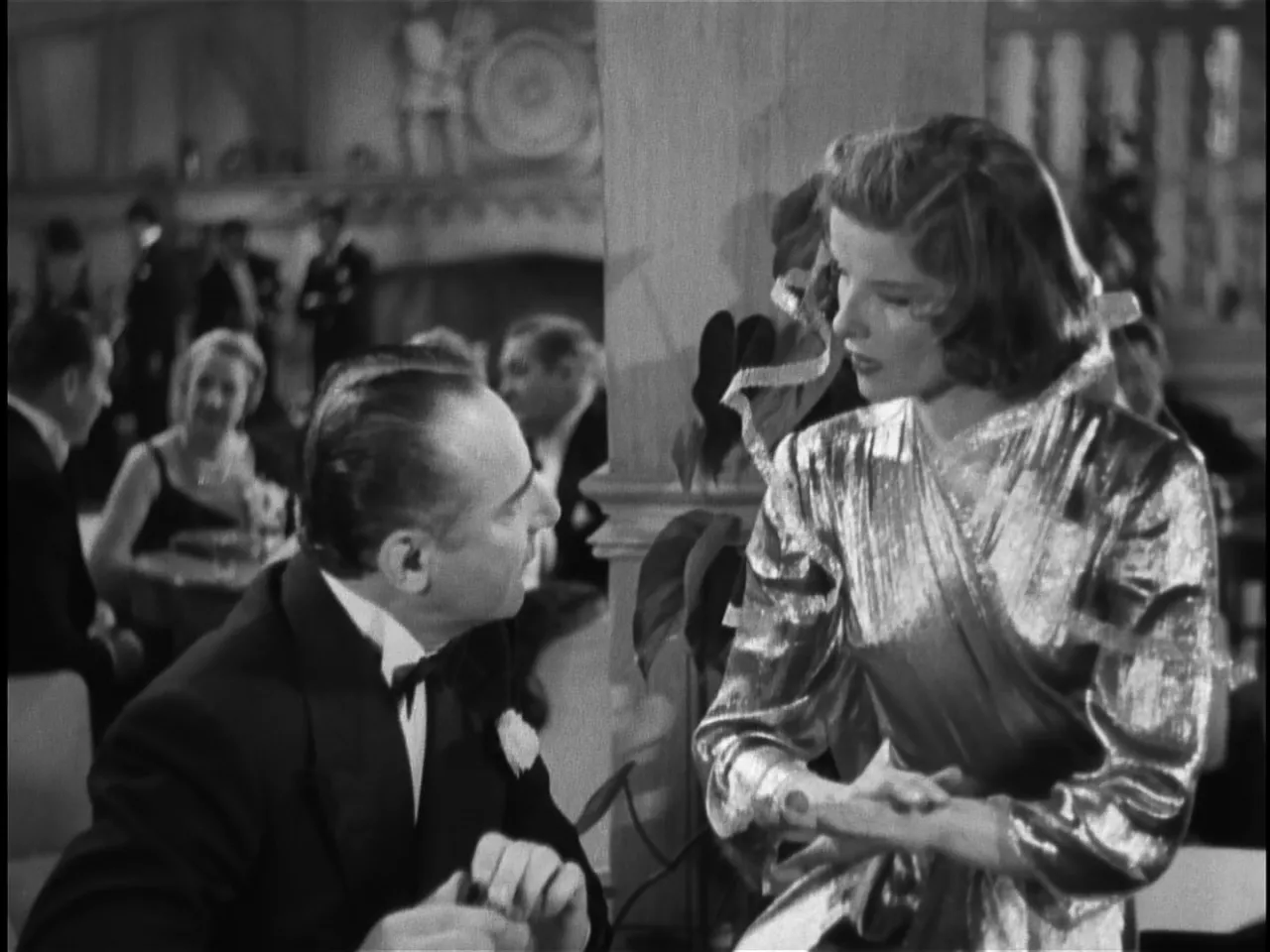
Noise interrogates those problems existence cannot shake off. It corresponds simultaneously to the excess of experience, the abundance of force, and the impossibility of understanding. Only when those missions once deemed “important” are about to be achieved does this initial, involuntary depletion become dangerous and seductive, urging reason to swing wildly like a manipulatable pendulum—it triggers the maximization of intensity, brazenly destroying the self-consistency of the existing being. The psychologist in the film mystifies things, questioning: a “lunatic,” a “hysterical” woman? Yet she leaps over the tripwire psychoanalysis sets for her with a single bound. Susan is like a kind of frank mystery, a comic antagonist, possessing only a naive, fearless candor—the camera sways gently, following her movements, and the whole world dances to her steps. She walks toward him, like fate slowly approaching, her light steps carrying some irresistible force. Alas! This creator of chaos—but how can one be furious at “chaos” itself? She is an elusive blank: the clamor is spoken, yet it seems unspoken—either becoming an unconstrained infinity due to too many words, or an unconsumable void due to too few. It is precisely under that unfortunately torn hem of the dress that we witness the separation that cannot be bridged with the rational world. The boundary between order and appearance begins to collapse, “to affirm difference in a state of permanent revolution and eternal return” (Deleuze, Difference and Repetition), this accidental encounter also becomes the target of fate.
An untimely chaos, a visual dismantling of reason, creates the most mischievous suggestion of all shots—David’s clothes torn into a comical triangle—the orderly imagination that focused life on the axis of neatness and decency is ripped apart, and the unpredictable emotional entanglement of the three is accelerated into the open. In a tone of ridicule, we might even jokingly call this mismatch a masculine pre-marital syndrome. An irresistible force is pushing him toward her, toward the center of all this absurdity. The lens becomes blurred—not because reality is distorted, but because habitual conventions are collapsing; the order of the world has long violated the suppression that intends to rule.
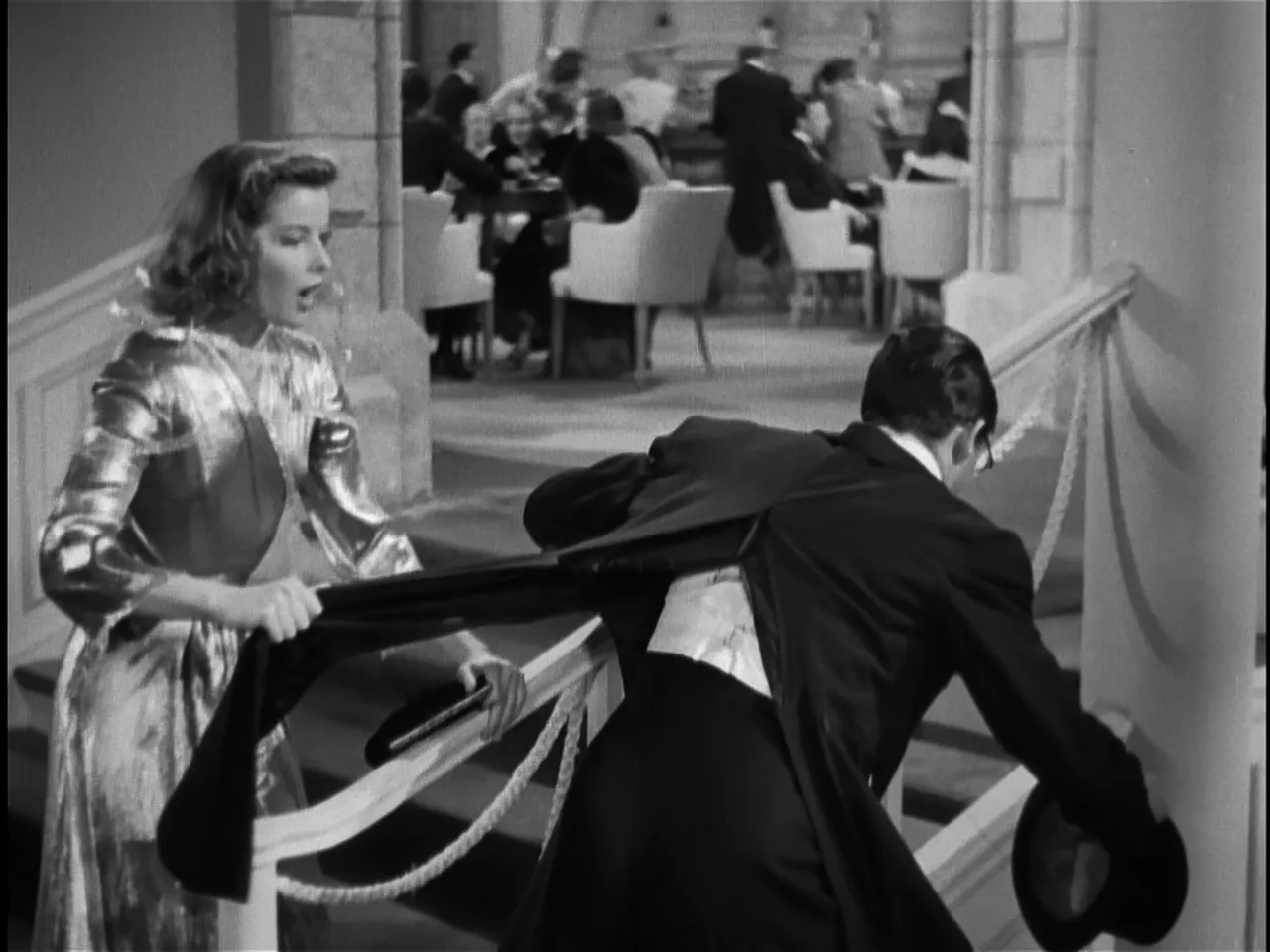
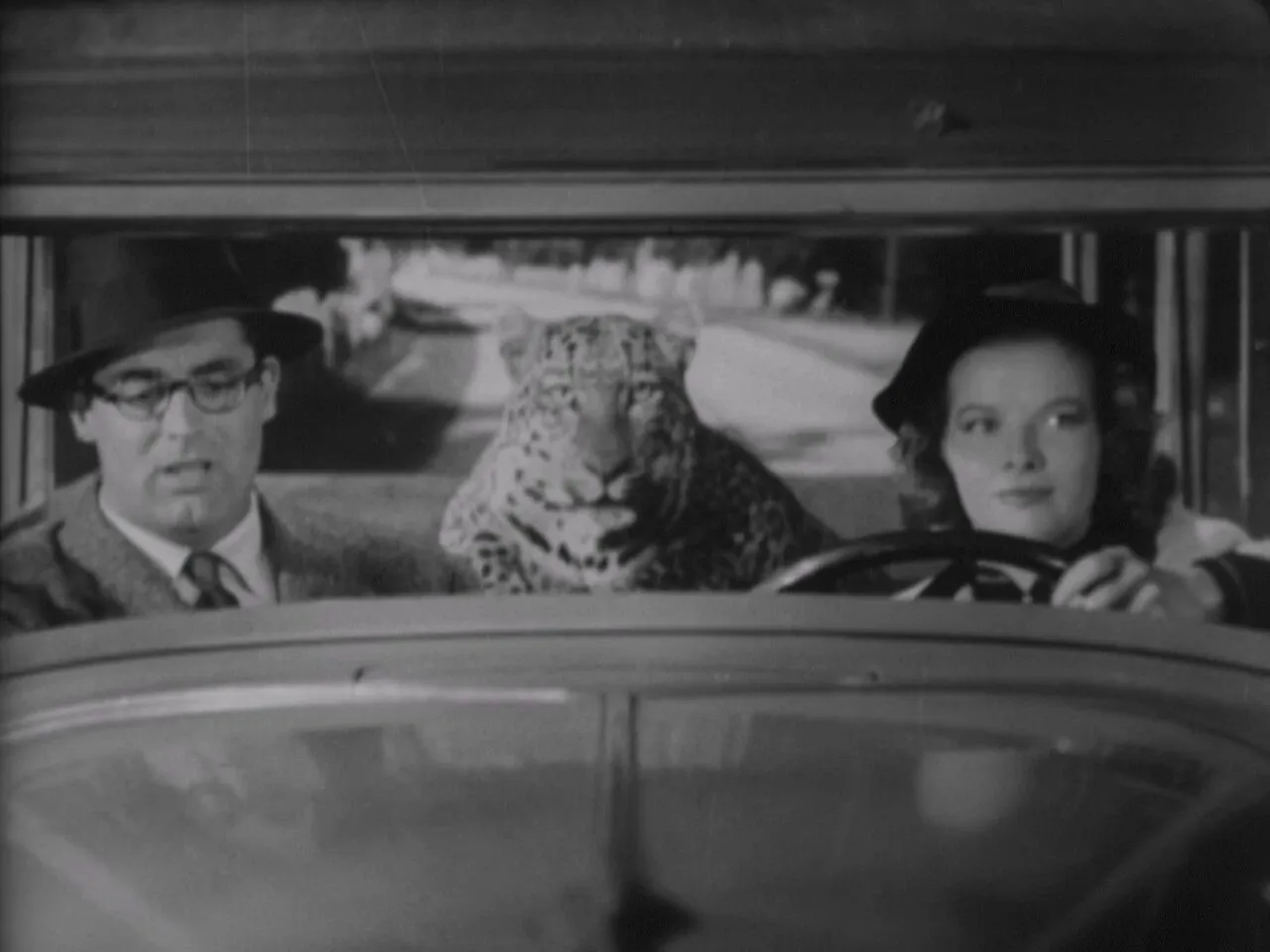
When people talk about freedom, they never point to resisting the irresistible machine of violence, but to the weightless vertigo of ceaseless falling—being tangibly thrown into a vast randomness, like being placed in an endless comical dream, an absurd experience mixed with leopards, hunting, and bandits. No substantive action can let this poor paleontologist escape this woman who fell from the sky; she always appears just right in every field where he is, and every effort of his only sinks him deeper into it. Although daily life still maintains a facade of moving forward, events always reveal themselves suddenly through clueless coincidences, yet with apt intervention... Yes, that bone is the powerful witness to this struggle.
This swaying inside and outside the play is almost isomorphic to how the audience, as a “middle ground,” uneasily watches the tension and game internal to the image: we guess this is just an anxiety-induced affair, this irrational delusion seems only to help this uneasy young man briefly forget the predicament entangled in meaning, and reason will eventually return to its promised land, a certain life trajectory, in the most appropriate and safe way. Although the final bone still tugs at our attention, the magic of the image gradually makes us stop our obsession. Here, Hawks moves toward a broader creative philosophy, where the MacGuffin is seen as a “decoy”: refusing to let objects or goals dominate characters, not chasing some hard, tangible falsehood or forever trapping oneself in lingering external things, but enjoying the tension and immediate comical experience of characters placed in situations. The path ahead pre-supposes no fixed response but tends toward any possible limit. “Experience leads to where it leads, not to some end given in advance” (Inner Experience).
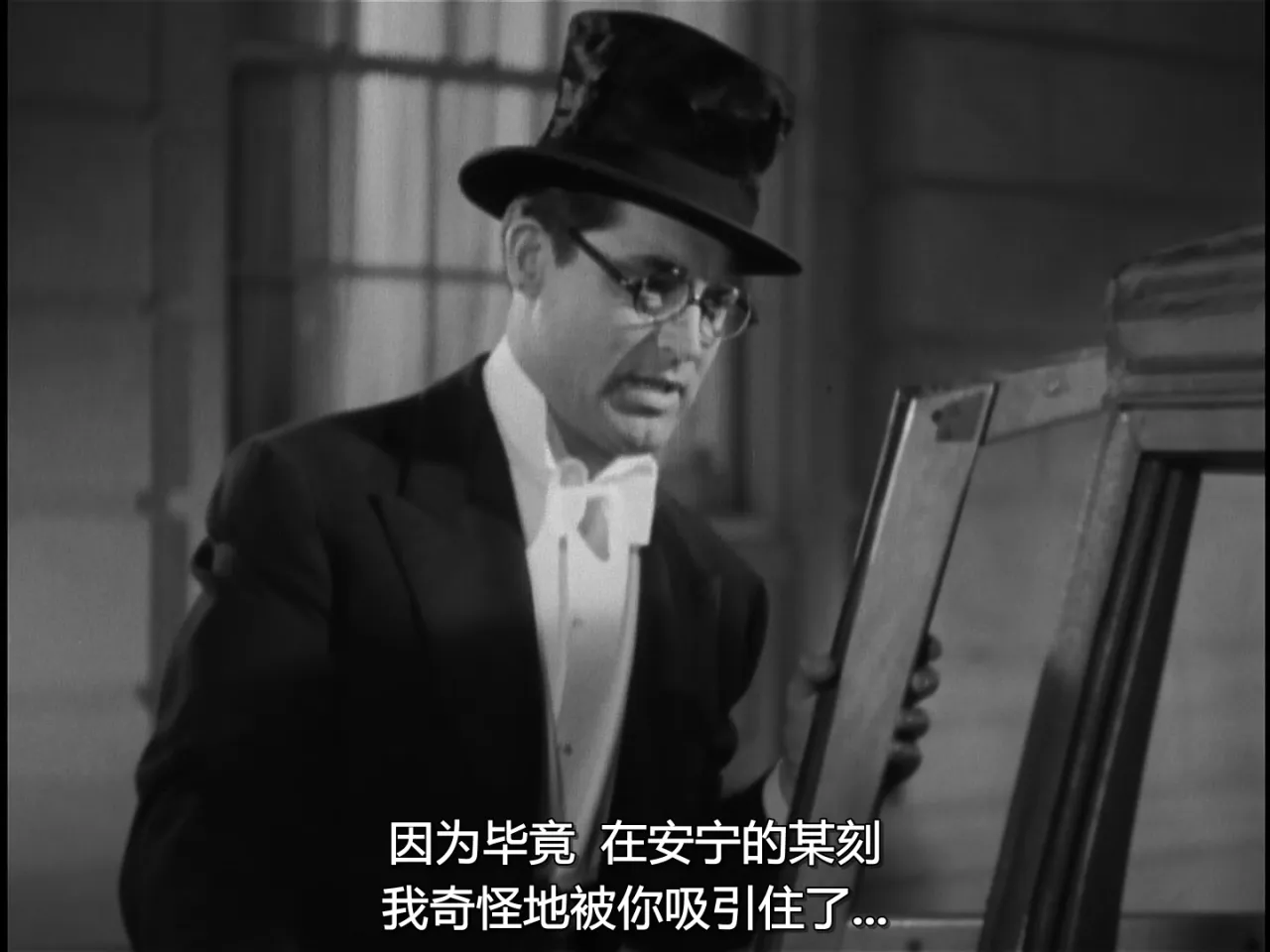
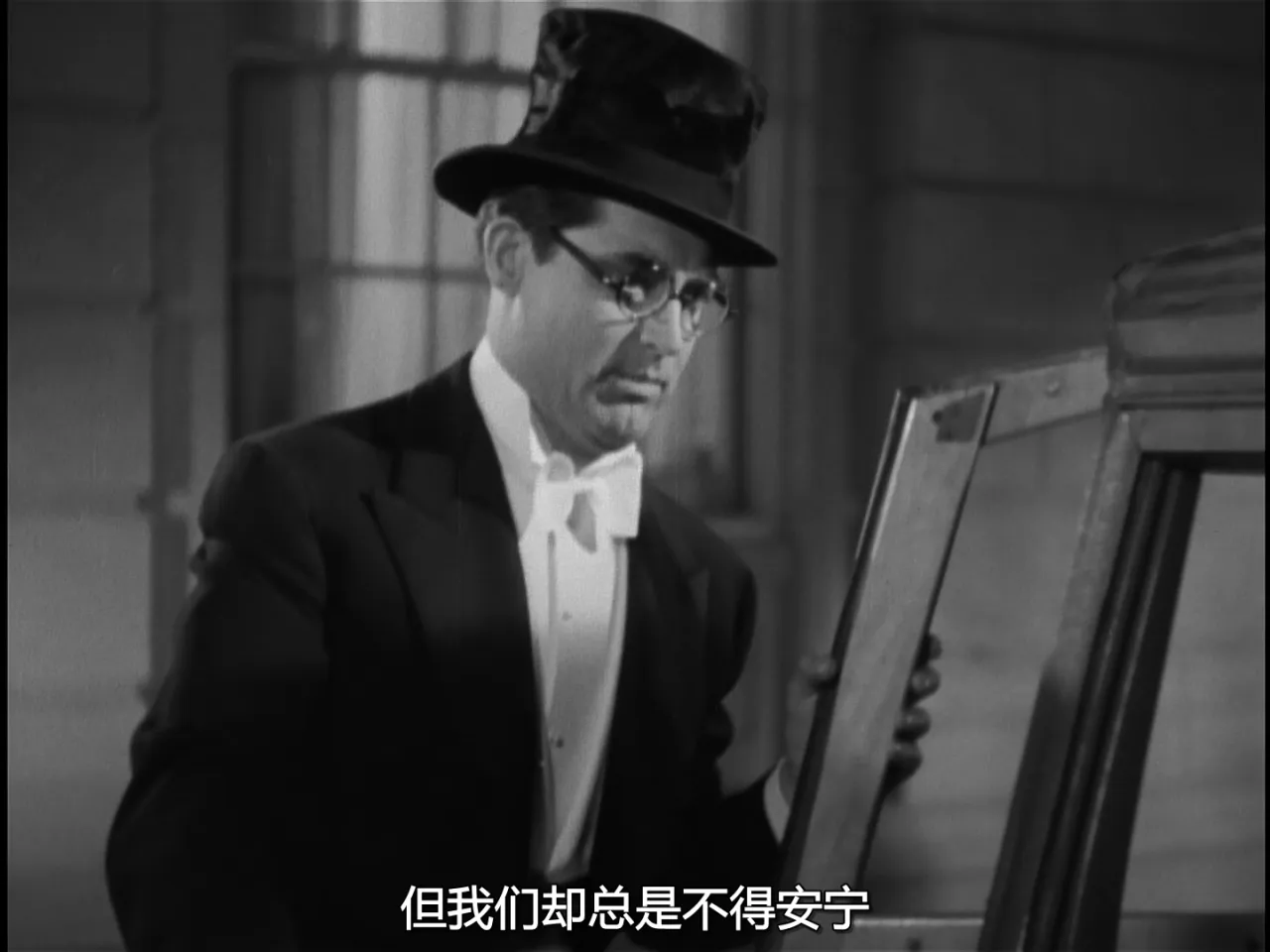
This forest seems to be a stage for the absurd. Shadows of trees intersect, blurring the boundaries of reason; every step forward is shrouded in the halo of the unknown and possibility. Recall when David chases the tame leopard in the quiet forest: the surrounding scenery seems to become bizarre and colorful, the breeze rustling the leaves, seeming to mock his tension and helplessness. Every move he makes is like a dramatic dance, stumbling and rushing, just like a puppet played by fate, trying to retrieve his lost order in this irrational jungle. Susan follows lightly behind; playfulness and bickering are like notes floating in the air, breaking the tension of this absurd chase. Suddenly, the black shadow of the leopard stops under a tall tree, its gaze like a deep lake, quietly watching them, as if responding to this long chase. She gently takes David’s hand, a gentle light shining in her eyes; all misunderstandings vanish at this moment. Her gaze is warm and firm, as if whispering: Look, it seems we didn’t need to struggle to catch it; it was always there.
They wander in the woods, no longer chasing the leopard but finding reconciliation in each other’s gaze. Moonlight spills on the ground like shards of gold; the breeze brushes their faces with the scent of earth and leaves—the earth seems to be a subtle movement, every fallen leaf making a soft sound under his feet, whispering the rhythm of life, paving a mysterious and radiant path for their reconciliation. David looks at this wonderful woman, the confusion and resistance in his eyes replaced by a profound understanding—she is not David’s opposite, but the inversion of his subconscious, the agent of chaos and freedom. So they laugh unconsciously, as if regaining the rhythm of life beyond constraints; their singing echoes in the quiet forest, awakening everything around them.
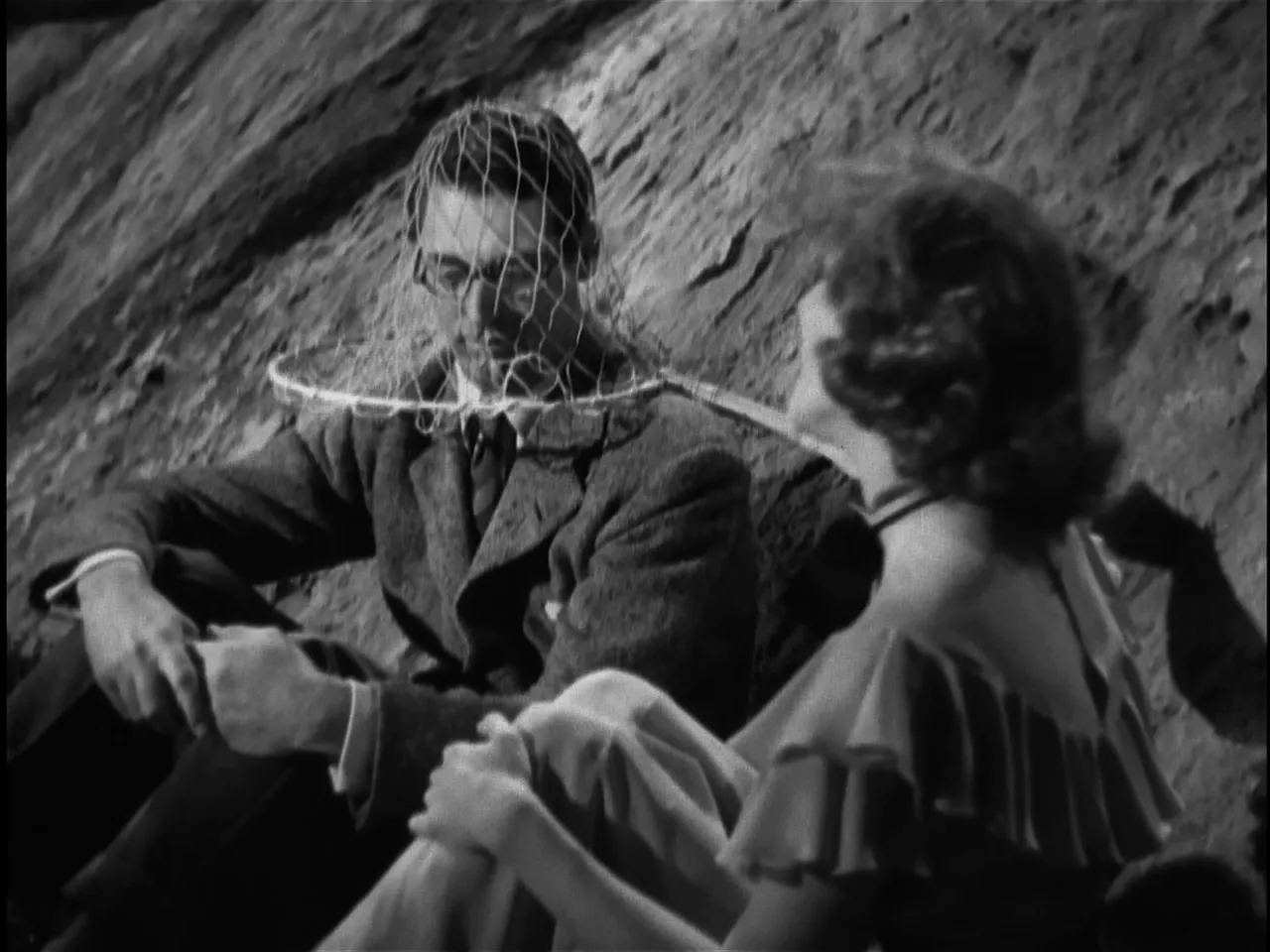
The sleepless night, trembling in its anxiety of existence, is not to be worried for after all. The intruder, external to ego and cannot be interrupted by logic or action, has now broken into all the cracks, becoming an internal thing. The dimension of her existence becomes his dimension. Her necessary nature becomes his necessary nature. In this way, he becomes occupied and filled by her. The forest falls silent; reconciliation rises quietly like a sunrise, illuminating the fog that once shrouded everything.
Next, the power dynamics in the police station evolve into a tangible theater of the absurd. All participants are playing roles, yet this script was never truly written. In this space, reason, authority, and identity are reshuffled. No serious dialogue can be maintained; all that remains is comical absurdity and uncontrollable laughter.
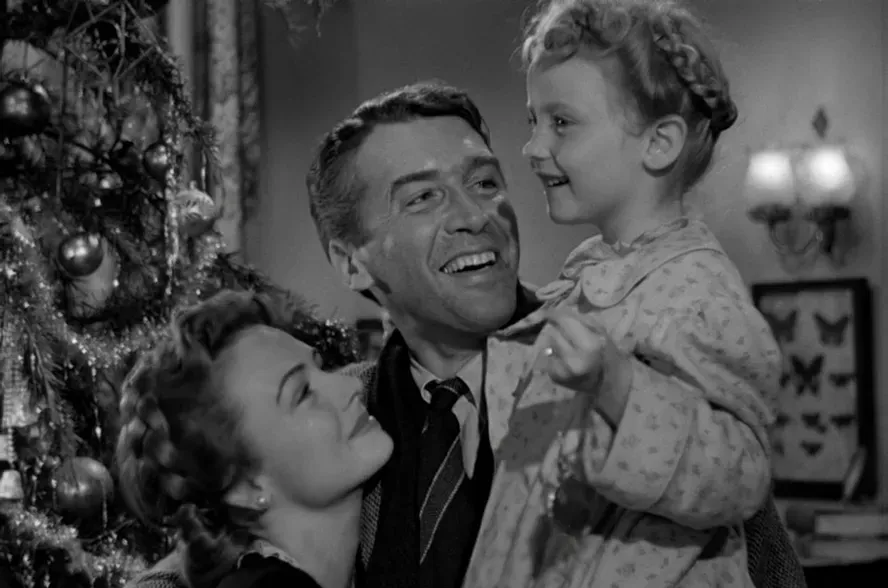
The audience often sees a naive and harmless optimism in comedy directors. Frank Capra built a dreamlike utopia in It’s a Wonderful Life [1946], where kindness, effort, true love, and purity became the ultimate forces saving humanity. Such faith, at certain points in history, once seemed indestructible, even if it relied on unconditional trust in traditional moral dogmas, social order, and authority systems. However, this concept appears increasingly illusory in today’s world, the rift with reality growing deeper. We might briefly bless and laugh at such naive, happy stories on the dark screen, but it feels as if we are doing so just to keep them from disappearing completely, cherishing them to survive the winter.
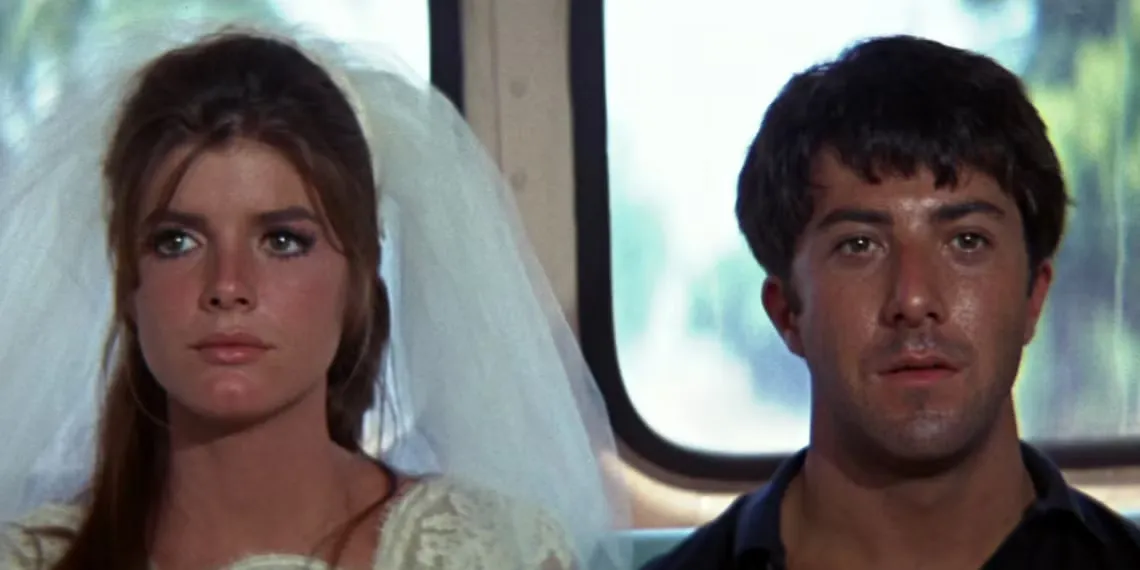
In comparison, Hawks, with comical dance steps, prefigures a more radical form of allegory and resistance for us: it concerns not just destroying order, but how to outline the problem with the premise of “destroying order” every time, moving toward a real decision. Here, all authority, order, and law become the hotbed of jokes. The characters arrive at a celebration of “irrationality” with a posture of resistance, distancing Hawks from being merely a naive dreamer. However, the story comes to an abrupt halt because they are about to access a more unknown vision (roaming freely in absurdity and chaos, and then what?). Whether that is closer to life or destructive, true freedom and life there remain unknown quantities—this is precisely the residue remaining from Hawks’ comedy magic. It is not “the prince and princess lived happily ever after,” but “where do we go after destroying order?” The film offers no solid answer. Immediately, the million-dollar fortune intensifies the disruption of it all—this ultimate accident is less a dialectical tug-of-war of postures than Hawks’ ambiguous trick: if it were in the sense of arriving at a “destination” or solution, the film would totally degenerate into a cliché operating on comedic rationality (the happy ending beloved by the masses and catering to political economy, while tipping toward a posture more embracing of death than life); but if it is for the continuation of chaos rather than its end, it merely fulfills the prophecy of the world’s uncertainty once again, accelerating into a booster for absurdity and disorder. The Graduate [1967] perhaps pessimistically inherited this thesis, but to avoid the self-deception and accelerated destruction of being obsessed with irrational illusions, Hawks places the full stop at the moment when nothing has ended, and the real is still about to strike.
To stop that unbearable reality from invading the image, madness is concentrated on the screen rather than turned outward. Unnecessary anxiety is minimal, yet we cannot ignore it as transparent. The secretive anxiety hidden under discipline is only gently revealed amidst the film’s banter, but the danger it contains is obviously no less than chasing a beast on an unknown journey. In other words, handing the self over to established rules or to unknown possibilities—which is more pathetic? It is precisely before a rebellious belief is completely lost that Hawks cleverly flips the sorrowful undertone, ensuring sincerity and the necessary nature of man through the liberation of velocity and a new romantic relationship. In a sense, the camera becomes a megaphone, amplifying those irrational whispers hidden behind every joke and every comical scene. But this voice itself is faint and indescribable; Hawks has to turn the volume to the max to create a resonance-like earthquake effect. And the new oscillation, acting as that leopard that can never be tamed, acts as a possibility of escaping conventions and incubating new life, endowed here with positive hope. It will replace that huge, stale antique—the mechanized order of life—replacing it with a rupture and reshaping, practicing the possibility of breaking away from the Castle. After all, regarding the suspended reality, isn’t it exactly the tacit mutual selection between the Castle and K. that jointly guarantees the irreversible, colossal system?
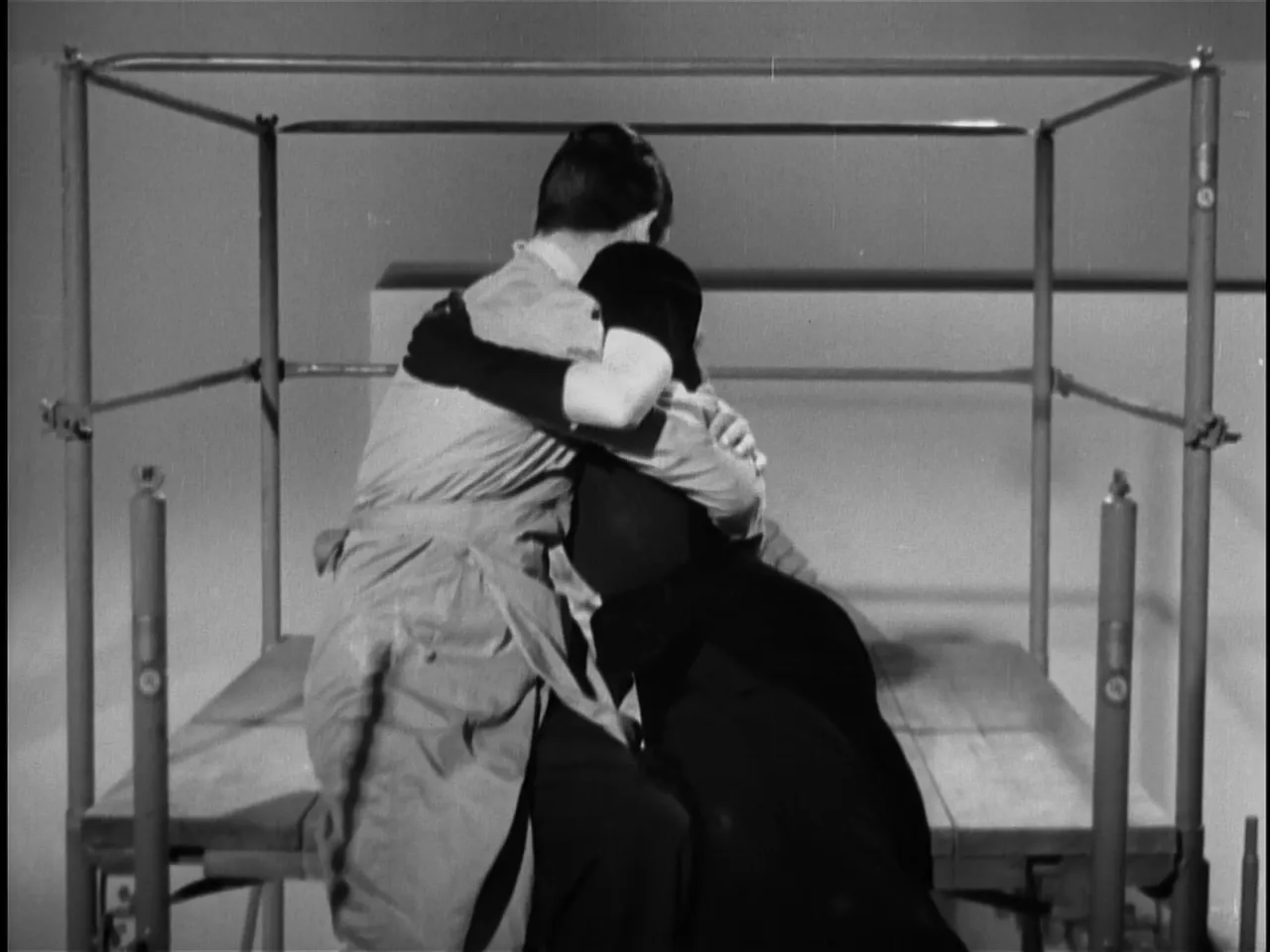
We must constantly oppose viewing this absurdity merely as an object of light mockery or a simple pastime at a safe distance. Today, uncertainty, chaos, contingency, and irrationality are already parts of reality (and quite likely the main parts). We seem to trek even more arduously through the ruins of doomsday prophecies, the system unreservedly devouring all residue, continuously acting upon lingering existential anxiety and self-exploitation. If this era has any alternative imagination, this is it. It is almost the simplest comedy, and perhaps a film revolutionaries would appreciate: like a delightful dream, ostensibly an easy victory, yet in the interlaced fragments, certain unspoken cracks of civilization are revealed. What Hawks presents is not a clear path, but a complex, trembling dawn. In this dawn mixing lightness and weight, we are not truly saved, but in the moment of disorder and laughter, an imagination that takes a slight step forward ignites a certain aura that has not faded. Although we will eventually fall deeper, or thereby escape, just as two lovers finally found a subtle reconciliation in madness, perhaps the meaning of life often lies in those most unpredictable moments. Therefore, Hawks lets us stay temporarily in that moment full of the unknown and chaos; we recognize each other, then embrace—that is the moving moment where all possibilities coexist.